Black History Today: Phillip Green, a model of love as consistency and quiet support
/Black History Today, created by Marcus Harden in honor of Black History Month, pays tribute to the living legacy of Black history in our community and beyond and recognizes the people among us who are boldly shaping the future.
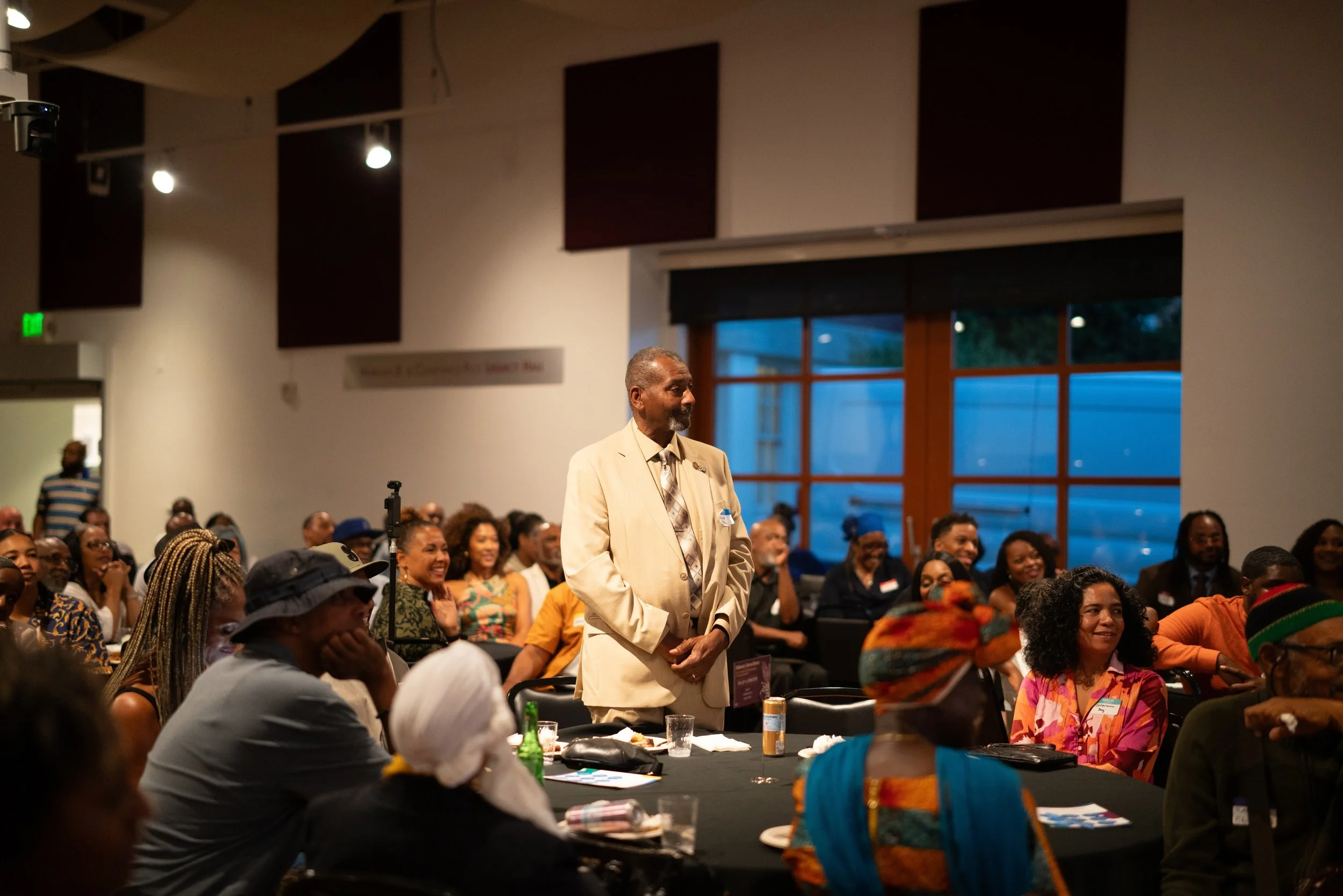
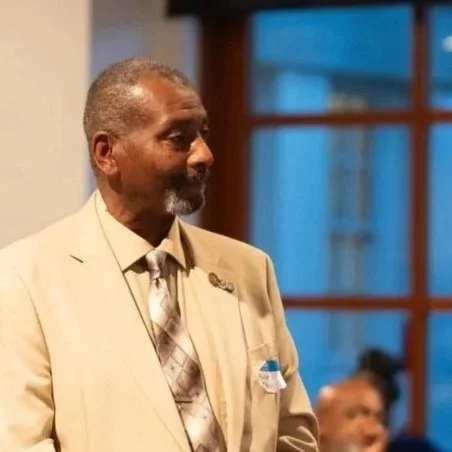
Photo by Alex Garland
“There is never time in the future in which we will work out our salvation. The challenge is in the moment; the time is always now.”
By Marcus Harrison Green
We do not celebrate Black men enough.
And when I say that, I do not mean it as a contest. I do not mean that in lifting up Black men we must lower anyone else in our vast and beautiful community. I mean that we rarely linger on the fullness of Black men: on their gentleness, their patience, their devotion, their quiet integrity. We speak often of Black men in the language of crisis or spectacle. We narrate them through violence, through failure, through myth. But we do not sit long enough with their tenderness. We do not archive their care.
And yet, that care is everywhere.
My first archive was my father.
My father, Philip Green, never announced himself as a lesson. He did not gather us around the table to lecture about manhood. He taught the way so many Black men of his generation taught, by living. His life was the curriculum. His days were the text.
For nearly five decades, he has worked at the VA Medical Center in Seattle, serving veterans with a steadiness that feels almost sacred. Perhaps it was the military that shaped him. Perhaps it was simply who he already was. But he carried with him a creed that felt both simple and profound: If something needs doing, you do it. And you do it without fanfare.
No applause. No social media post. No plaque.
Just duty.
I watched him deliver groceries to cancer survivors who were too tired from treatment to leave their homes. I watched him buy — with his own money — the food to feed hundreds at community fundraisers for survivors, for kinship caregivers, for children who needed school supplies their parents could not afford. He did not just donate. He chopped. He seasoned. He stirred. He stood over heat for hours so others could be nourished.
I watched him become community transit, driving elders and disabled neighbors to grocery stores and back, because the bus route was too far and the walk too long. I watched him open our home to children who did not share his blood and erase any daylight between them and those who did. There was no hierarchy of love in our house. No distinction between adopted and biological. Only belonging.
This is what I mean when I say we do not celebrate Black men enough.
Because the world has so often flattened them into caricature — brute, absent, hardened — that when they show up as architects of tenderness, as engineers of stability, as custodians of other people’s burdens, we struggle to know what to call it. We do not yet have the language for Black masculinity that bends without breaking, that protects without posturing, that loves without spectacle.
My father is not loud. He does not declare his affection the way some do, wrapping every phone call in “I love you” like a ribbon. You may not hear it from him every day — perhaps not even every year. But you will see it. You will see it in the way he shows up. In the way he returns. In the way he does not disappear.
He is part of the machinery of community, not the polished exterior, not the microphone, not the ribbon-cutting, but the gears. The parts that turn quietly so everything else can move. The parts you only notice when they stop working.
And he has never stopped.
What moves me most, especially now, is not only who he has been, but who he has allowed himself to become. A Baby Boomer. A child of the 60s and 70s. A man shaped by an era with rigid definitions of masculinity. And yet I have watched him soften in the right places. I have watched him listen. I have watched him stretch. I have watched him embrace progress not as a threat to his identity but as an expansion of it. He has allowed masculinity to be fluid, to be thoughtful, to be humane.
That, too, is courage.
When I was a child, he would come home exhausted from long shifts, shoulders heavy from the day. And still, he would sit with me by the fireplace in our living room and read the latest Superman comic. He gave each character a voice. He leaned into the drama. He made it theatrical in the way only a father performing for his child can.
Superman was my favorite voice, of course.
Because to me, he was not reading about a hero. He was one.
Not the kind who flies across the sky in a red cape. But the kind who stands in grocery store parking lots waiting for an elder to finish shopping. The kind who wakes up before dawn to serve people who may never know his name. The kind who loves children — all children — as if they were his own.
We celebrate the exceptional. We celebrate the loud. We celebrate the historic firsts and the viral moments. But there is another lineage of Black men who deserve celebration — the steady ones. The ones whose names will not trend. The ones whose lives are measured not in headlines but in households held together.
Black History Month often calls us to remember the grand figures. And we should. But history is also made in kitchens. In carpools. In hospital corridors. In living rooms warmed by a fireplace and a comic book.
My father is not a statue. He is not a syllabus. He is not a speech.
He is a man who did what needed doing.
And in that quiet devotion, he gave me a new definition of strength — one rooted not in dominance, but in service. Not in spectacle, but in steadfastness. Not in being seen, but in being there.
We do not celebrate Black men enough.
But I am starting here.

Original artwork created by Devin Chicras for the South Seattle Emerald.