Are our kids being educated, or are we all just getting schooled?

John Taylor Gatto was named New York State's Teacher of the Year three years in a row from 1988-1990. Nearly 400,000 active teachers currently belong to the union in the Empire State, so even being mentioned in a conversation about the state's best teachers has you breathing rarified air. Winning the award outright three straight years is an astounding singular achievement. Gatto was clearly at the pinnacle of his profession.

I stumbled onto the transcript of his third and final acceptance speech, and despite a quarter-century having passed, I find that he raised many of the same questions I have been wrestling with myself -- and many I don't think I had quite reached yet, or been quite bold enough to even ask myself.

I find that Gatto also echoes much of the stifling rigidity I struggled against as a kid growing up in the schools he's describing. It echoes just as loudly the fears I've struggled as an adult to name when I think about sending my own kids into the same system of public schools -- a fear that is only magnified by having kids of color.

The winter solstice is just behind us and the New Year is just ahead. Now is the time for reflection, a time to ask tough questions about our past, to honor ourselves and our communities in the present, and to dream of bold visions for the future.

What is the goal of our public education system? Is it to create like-minded U.S. citizens, or to empower our young people to create the future?

Can we realistically reform a system of education that is currently a pivotal part of the two-headed snake in the grass known as the school-to-prison pipeline? Can we really reform a system that was founded on segregation, racism and capitalist values? Or do we need to start with a new foundation?

Can we have honest conversations about the state of our public education system when so many people have confused their identity with being tied up in the system and so defend it as though they're defending their very selves?

Can we ever hope to mend the inequity embedded in our public schools when our schools are part of a web of systemic inequity? They inevitably reflect the tenor of the government that funds and directs them, and that government legislates with a capitalist mentality. With our newly elected Don, the prospects of positivity and equity coming from a government agency seem more unlikely than ever.

What kind of education do our kids deserve? How do we deliver that to them right now?

Without further ranting, here is Why Schools Don't Educate, by Taylor Gatto, courtesy of The Natural Child Project:

I accept this award on behalf of all the fine teachers I've known over the years who've struggled to make their transactions with children honorable ones, men and women who are never complacent, always questioning, always wrestling to define and redefine endlessly what the word "education" should mean. A Teacher of the Year is not the best teacher around, those people are too quiet to be easily uncovered, but he is a standard-bearer, symbolic of these private people who spend their lives gladly in the service of children. This is their award as well as mine.
We live in a time of great school crisis. Our children rank at the bottom of nineteen industrial nations in reading, writing and arithmetic. At the very bottom. The world's narcotic economy is based upon our own consumption of the commodity, if we didn't buy so many powdered dreams the business would collapse - and schools are an important sales outlet. Our teenage suicide rate is the highest in the world and suicidal kids are rich kids for the most part, not the poor. In Manhattan fifty per cent of all new marriages last less than five years. So something is wrong for sure.
Our school crisis is a reflection of this greater social crisis. We seem to have lost our identity. Children and old people are penned up and locked away from the business of the world to a degree without precedent - nobody talks to them anymore and without children and old people mixing in daily life a community has no future and no past, only a continuous present. In fact, the name "community" hardly applies to the way we interact with each other. We live in networks, not communities, and everyone I know is lonely because of that. In some strange way school is a major actor in this tragedy just as it is a major actor in the widening guilt among social classes. Using school as a sorting mechanism we appear to be on the way to creating a caste system, complete with untouchables who wander through subway trains begging and sleep on the streets.
I've noticed a fascinating phenomenon in my twenty-five years of teaching - that schools and schooling are increasingly irrelevant to the great enterprises of the planet. No one believes anymore that scientists are trained in science classes or politicians in civics classes or poets in English classes. The truth is that schools don't really teach anything except how to obey orders. This is a great mystery to me because thousands of humane, caring people work in schools as teachers and aides and administrators but the abstract logic of the institution overwhelms their individual contributions. Although teachers do care and do work very hard, the institution is psychopathic - it has no conscience. It rings a bell and the young man in the middle of writing a poem must close his notebook and move to different cell where he must memorize that man and monkeys derive from a common ancestor.
Our form of compulsory schooling is an invention of the state of Massachusetts around 1850. It was resisted - sometimes with guns - by an estimated eighty per cent of the Massachusetts population, the last outpost in Barnstable on Cape Cod not surrendering its children until the 1880's when the area was seized by militia and children marched to school under guard.
Now here is a curious idea to ponder. Senator Ted Kennedy's office released a paper not too long ago claiming that prior to compulsory education the state literacy rate was 98% and after it the figure never again reached above 91% where it stands in 1990. I hope that interests you.
Here is another curiosity to think about. The homeschooling movement has quietly grown to a size where one and a half million young people are being educated entirely by their own parents. Last month the education press reported the amazing news that children schooled at home seem to be five or even ten years ahead of their formally trained peers in their ability to think.
I don't think we'll get rid of schools anytime soon, certainly not in my lifetime, but if we're going to change what is rapidly becoming a disaster of ignorance, we need to realize that the school institution "schools" very well, but it does not "educate" - that's inherent in the design of the thing. It's not the fault of bad teachers or too little money spent, it's just impossible for education and schooling ever to be the same thing.
Schools were designed by Horace Mann and Barnard Sears and Harper of the University of Chicago and Thorndyke of Columbia Teachers College and some other men to be instruments of the scientific management of a mass population. Schools are intended to produce through the application of formulae, formulaic human beings whose behavior can be predicted and controlled.
To a very great extent, schools succeed in doing this. But our society is disintegrating, and in such a society, the only successful people are self-reliant, confident, and individualistic - because the community life which protects the dependent and the weak is dead. The products of schooling are, as I've said, irrelevant. Well-schooled people are irrelevant. They can sell film and razor blades, push paper and talk on the telephones, or sit mindlessly before a flickering computer terminal but as human beings they are useless. Useless to others and useless to themselves.
The daily misery around us is, I think, in large measure caused by the fact that - as Paul Goodman put it thirty years ago - we force children to grow up absurd. Any reform in schooling has to deal with its absurdities.
It is absurd and anti-life to be part of a system that compels you to sit in confinement with people of exactly the same age and social class. That system effectively cuts you off from the immense diversity of life and the synergy of variety, indeed it cuts you off from your own part and future, scaling you to a continuous present much the same way television does.
It is absurd and anti-life to be part of a system that compels you to listen to a stranger reading poetry when you want to learn to construct buildings, or to sit with a stranger discussing the construction of buildings when you want to read poetry.
It is absurd and anti-life to move from cell to cell at the sound of a gong for every day of your natural youth in an institution that allows you no privacy and even follows you into the sanctuary of your home demanding that you do its "homework".
"How will they learn to read?" you say and my answer is "Remember the lessons of Massachusetts." When children are given whole lives instead of age-graded ones in cellblocks they learn to read, write, and do arithmetic with ease if those things make sense in the kind of life that unfolds around them.
But keep in mind that in the United States almost nobody who reads, writes or does arithmetic gets much respect. We are a land of talkers, we pay talkers the most and admire talkers the most, and so our children talk constantly, following the public models of television and schoolteachers. It is very difficult to teach the "basics" anymore because they really aren't basic to the society we've made.
Two institutions at present control our children's lives - television and schooling, in that order. Both of these reduce the real world of wisdom, fortitude, temperance, and justice to a never-ending, non-stopping abstraction. In centuries past the time of a child and adolescent would be occupied in real work, real charity, real adventures, and the realistic search for mentors who might teach what you really wanted to learn. A great deal of time was spent in community pursuits, practicing affection, meeting and studying every level of the community, learning how to make a home, and dozens of other tasks necessary to become a whole man or woman.
But here is the calculus of time the children I teach must deal with:
Out of the 168 hours in each week, my children sleep 56. That leaves them 112 hours a week out of which to fashion a self.
My children watch 55 hours of television a week according to recent reports. That leaves them 57 hours a week in which to grow up.
My children attend school 30 hours a week, use about 6 hours getting ready, going and coming home, and spend an average of 7 hours a week in homework - a total of 45 hours. During that time, they are under constant surveillance, have no private time or private space, and are disciplined if they try to assert individuality in the use of time or space. That leaves 12 hours a week out of which to create a unique consciousness. Of course, my kids eat, and that takes some time - not much, because they've lost the tradition of family dining, but if we allot 3 hours a week to evening meals, we arrive at a net amount of private time for each child of 9 hours.
It's not enough. It's not enough, is it? The richer the kid, or course, the less television he watches but the rich kid's time is just as narrowly proscribed by a somewhat broader catalog of commercial entertainments and his inevitable assignment to a series of private lessons in areas seldom of his actual choice.
And these things are oddly enough just a more cosmetic way to create dependent human beings, unable to fill their own hours, unable to initiate lines of meaning to give substance and pleasure to their existence. It's a national disease, this dependency and aimlessness, and I think schooling and television and lessons - the entire Chautauqua idea - has a lot to do with it.
Think of the things that are killing us as a nation - narcotic drugs, brainless competition, recreational sex, the pornography of violence, gambling, alcohol, and the worst pornography of all - lives devoted to buying things, accumulation as a philosophy - all of them are addictions of dependent personalities, and that is what our brand of schooling must inevitably produce.
I want to tell you what the effect is on children of taking all their time from them - time they need to grow up - and forcing them to spend it on abstractions. You need to hear this, because no reform that doesn't attack these specific pathologies will be anything more than a facade.
  1. The children I teach are indifferent to the adult world. This defies the experience of thousands of years. A close study of what big people were up to was always the most exciting occupation of youth, but nobody wants to grow up these days and who can blame them? Toys are us.
  2. The children I teach have almost no curiosity and what they do have is transitory; they cannot concentrate for very long, even on things they choose to do. Can you see a connection between the bells ringing again and again to change classes and this phenomenon of evanescent attention?
  3. The children I teach have a poor sense of the future, of how tomorrow is inextricably linked to today. As I said before, they have a continuous present, the exact moment they are at is the boundary of their consciousness.
  4. The children I teach are ahistorical, they have no sense of how past has predestined their own present, limiting their choices, shaping their values and lives.
  5. The children I teach are cruel to each other, they lack compassion for misfortune, they laugh at weakness, and they have contempt for people whose need for help shows too plainly.
  6. The children I teach are uneasy with intimacy or candor. My guess is that they are like many adopted people I've known in this respect - they cannot deal with genuine intimacy because of a lifelong habit of preserving a secret inner self inside a larger outer personality made up of artificial bits and pieces of behavior borrowed from television or acquired to manipulate teachers. Because they are not who they represent themselves to be the disguise wears thin in the presence of intimacy so intimate relationships have to be avoided.
  7. The children I teach are materialistic, following the lead of schoolteachers who materialistically "grade" everything - and television mentors who offer everything in the world for free.
  8. The children I teach are dependent, passive, and timid in the presence of new challenges. This is frequently masked by surface bravado, or by anger or aggressiveness but underneath is a vacuum without fortitude.
I could name a few other conditions that school reform would have to tackle if our national decline is to be arrested, but by now you will have grasped my thesis, whether you agree with it or not. Either schools have caused these pathologies, or television, or both. It's a simple matter [of] arithmetic, between schooling and television all the time the children have is eaten away. That's what has destroyed the American family, it is no longer a factor in the education of its own children. Television and schooling, in those things the fault must lie.
What can be done? First we need a ferocious national debate that doesn't quit, day after day, year after year. We need to scream and argue about this school thing until it is fixed or broken beyond repair, one or the other. If we can fix it, fine; if we cannot, then the success of homeschooling shows a different road to take that has great promise. Pouring the money we now pour into family education might kill two birds with one stone, repairing families as it repairs children.
Genuine reform is possible but it shouldn't cost anything. We need to rethink the fundamental premises of schooling and decide what it is we want all children to learn and why. For 140 years this nation has tried to impose objectives downward from the lofty command center made up of "experts", a central elite of social engineers. It hasn't worked. It won't work. And it is a gross betrayal of the democratic promise that once made this nation a noble experiment. The Russian attempt to create Plato's republic in Eastern Europe has exploded before [our] eyes, our own attempt to impose the same sort of central orthodoxy using the schools as an instrument is also coming apart at the seams, albeit more slowly and painfully. It doesn't work because its fundamental premises are mechanical, anti-human, and hostile to family life. Lives can be controlled by machine education but they will always fight back with weapons of social pathology - drugs, violence, self-destruction, indifference, and the symptoms I see in the children I teach.
It's high time we looked backwards to regain an educational philosophy that works. One I like particularly well has been a favorite of the ruling classes of Europe for thousands of years. I use as much of it as I can manage in my own teaching, as much, that is, as I can get away with given the present institution of compulsory schooling. I think it works just as well for poor children as for rich ones.
At the core of this elite system of education is the belief that self-knowledge is the only basis of true knowledge. Everywhere in this system, at every age, you will find arrangements to place the child alone in an unguided setting with a problem to solve. Sometimes the problem is fraught with great risks, such as the problem of galloping a horse or making it jump, but that, of course, is a problem successfully solved by thousands of elite children before the age of ten. Can you imagine anyone who had mastered such a challenge ever lacking confidence in his ability to do anything? Sometimes the problem is the problem of mastering solitude, as Thoreau did at Walden Pond, or Einstein did in the Swiss customs house.
One of my former students, Roland Legiardi-Lura, though both his parents were dead and he had no inheritance, took a bicycle across the United States alone when he was hardly out of boyhood. Is it any wonder then that in manhood when he decided to make a film about Nicaragua, although he had no money and no prior experience with film-making, that it was an international award-winner - even though his regular work was as a carpenter.
Right now we are taking all the time from our children that they need to develop self-knowledge. That has to stop. We have to invent school experiences that give a lot of that time back, we need to trust children from a very early age with independent study, perhaps arranged in school but which takes place away from the institutional setting. We need to invent curriculum where each kid has a chance to develop private uniqueness and self-reliance.
A short time ago I took seventy dollars and sent a twelve-year-old girl from my class with her non-English speaking mother on a bus down the New Jersey coast to take the police chief of Sea Bright to lunch and apologize for polluting [his] beach with a discarded Gatorade bottle. In exchange for this public apology I had arranged with the police chief for the girl to have a one-day apprenticeship in a small town police procedures. A few days later, two more of my twelve-year-old kids traveled alone to West First Street from Harlem where they began an apprenticeship with a newspaper editor, next week three of my kids will find themselves in the middle of the Jersey swamps at 6 A.M., studying the mind of a trucking company president as he dispatches 18-wheelers to Dallas, Chicago, and Los Angeles.
Are these "special" children in a "special" program? Well, in one sense, yes, but nobody knows about this program but the kids and myself. They're just nice kids from Central Harlem, bright and alert, but so badly schooled when they came to me that most of them can't add or subtract with any fluency. And not a single one knew the population of New York City or how far it is from New York to California.
Does that worry me? Of course, but I am confident that as they gain self-knowledge they'll also become self-teachers - and only self-teaching has any lasting value.
We've got to give kids independent time right away because that is the key to self-knowledge, and we must re-involve them with the real world as fast as possible so that the independent time can be spent on something other than more abstraction. This is an emergency, it requires drastic action to correct - our children are dying like flies in schooling, good schooling or bad schooling, it's all the same. Irrelevant.
What else does a restructured school system need? It needs to stop being a parasite on the working community. Of all the pages in the human ledger, only our tortured entry has warehoused children and asked nothing of them in service to the general good. For a while I think we need to make community service a required part of schooling. Besides the experience in acting unselfishly that will teach, it is the quickest way to give young children real responsibility in the mainstream of life.
For five years I ran a guerilla program where I had every kid, rich and poor, smart and dipsy, give 320 hours a year of hard community service. Dozens of those kids came back to me years later, grown up, and told me that one experience of helping someone else changed their lives. It taught them to see in new ways, to rethink goals and values. It happened when they were thirteen, in my Lab School program - only made possible because my rich school district was in chaos. When "stability" returned the Lab was closed. It was too successful with a wildly mixed group of kids, at too small of a cost, to be allowed to continue. We made the expensive elite programs look bad.
There is no shortage of real problems in the city. Kids can be asked to help solve them in exchange for the respect and attention of the total adult world. Good for kids, good for all the rest of us. That's curriculum that teaches Justice, one of the four cardinal virtues in every system of elite education. What's sauce for the rich and powerful is surely sauce for the rest of us - what is more, the idea is absolutely free as are all other genuine reform ideas in education. Extra money and extra people put into this sick institution will only make it sicker.
Independent study, community service, adventures in experience, large doses of privacy and solitude, a thousand different apprenticeships, the one day variety or longer - these are all powerful, cheap and effective ways to start a real reform of schooling. But no large-scale reform is ever going to work to repair our damaged children and our damaged society until we force the idea of "school" open - to include family as the main engine of education. The Swedes realized that in 1976 when they effectively abandoned the system of adopting unwanted children and instead spent national time and treasure on reinforcing the original family so that children born to Swedes were wanted. They didn't succeed completely but they did succeed in reducing the number of unwanted Swedish children from 6000 in l976 to 15 in 1986. So it can be done. The Swedes just got tired of paying for the social wreckage caused by children not raised by their natural parents so they did something about it. We can, too.
Family is the main engine of education. If we use schooling to break children away from parents - and make no mistake, that has been the central function of schools since John Cotton announced it as the purpose of the Bay Colony schools in 1650 and Horace Mann announced it as the purpose of Massachusetts schools in 1850 - we're going to continue to have the horror show we have right now. The curriculum of family is at the heart of any good life, we've gotten away from that curriculum, time to return to it. The way to sanity in education is for our schools to take the lead in releasing the stranglehold of institutions on family life, to promote during school time confluences of parent and child that will strengthen family bonds. That was my real purpose in sending the girl and her mother down the Jersey coast to meet the police chief. I have many ideas to make a family curriculum and my guess is that a lot of you will have many ideas, too, once you begin to think about it. Our greatest problem in getting the kind of grass-roots thinking going that could reform schooling is that we have large vested interests pre-emptying all the air time and profiting from schooling just exactly as it is despite rhetoric to the contrary. We have to demand that new voices and new ideas get a hearing, my ideas and yours. We've all had a bellyful of authorized voices mediated by television and the press - a decade long free-for-all debate is what is called for now, not any more "expert" opinions. Experts in education have never been right, their "solutions" are expensive, self-serving, and always involve further centralization. Enough. Time for a return to democracy, individuality, and family. I've said my piece. Thank you.
 
© John Taylor Gatto. All rights reserved
'Still I look to find a reason to believe' in Seattle Public Schools

Seattle Public Schools announced recently that it will face a $74 million budget shortfall if the state legislature does not "fully fund education." Since that phrase has been so overused in Washington that it's lost all meaning, it seems safe to assume SPS will have to make some pretty enormous cuts.

Stephan Blanford, our strongest and often lone voice for equity and reason on the incessantly dysfunctional Seattle School Board, wrote in a piece for the South Seattle Emerald about his fears that our more-voiceless south-end schools will bear the greater burden of these looming cuts:

"I know I am motivated more by fear — fear of the kinds of cuts that we will need to make in December and January as the board grapples with a deficit that has grown to $74 million. I am deeply troubled by the ramifications these cuts will have in classrooms across the city and the uneven impact we could have on schools serving low income students and students of color. And I am motivated by my knowledge of what has happened in the past.
First, the uneven impact. Academic research demonstrates that seniority-based teacher layoffs disproportionately impact schools serving low income and students of color. This is because those schools tend to be staffed with newer teachers having less seniority – the last hired is often the first fired. Many of our principals will tell you that they’ve finally gotten a good mix of older/experienced and younger/energetic teachers in their buildings. As a result, many are optimistic for the first time in their careers about the chances of closing our achievement/opportunity gaps — unacceptable gaps that are larger than nearly every big city school district in the nation.
Secondly, based on recent history, I have come to believe that the school board that I serve on is not sufficiently oriented to or motivated by the need to eliminate the gap, in spite of the fact that the majority of students (53%) served by Seattle Public Schools are students of color. Obviously, not every student of color is in the gap – in fact, many students of color outperform their peers. But for those that don’t, there was very little outrage or even discussion when the board learned of our national ranking in a story that was reported back in May. I’ve frequently seen members of the board disregard advice from the staff and parents when it conflicts with the narrow interests of some of their constituents. During the months when we first learned of a possible budget deficit, some of my colleagues were much more interested in how to spend last year’s $10 million surplus, which could have made a sizable dent in the projected deficit. Many of the choices that were made during that exercise only make our achievement/opportunity gaps worse.
Why does this matter?
If you have a child in Seattle Public Schools, or are troubled by the growing gaps based on family income, race and ethnicity, gentrification, the school-to-prison pipeline or any number of societal ills confronting our city, region and nation, you too should be concerned! At the root of each of these problems is society’s failure to adequately prepare our children to reach their awesome potential. IT IS CRITICAL THAT WE STEP UP NOW."


If you want to lose hope altogether, read the comments on Blanford's article. He's met with defensiveness, privilege and skepticism, often admittedly from the north end residents (and from Charlie Mas, who loves chiming in on our issues from wherever he's at).

This isn't about dividing the city into a north and south end. That's already been done. We are already the have-nots. It's not that there are no low-income families in the north end, or that there is no money in the south. It's that these are two very different places, home to two very distinct populations. Our city has been largely segregated for ages.

Blanford's fears are based in reality, and part of that reality is that schools like Emerson exist in a different realm of Seattle Public Schools than their north-end counterparts. At Emerson, we are already operating with two long-term substitutes where we should have full-time teachers. We are one of the only schools in the city with such a high percentage of students eligible for free/reduced lunch that it's just given to everyone. We've had four principals in four years.

This is, by definition, a high-need school, but it's serving mostly low-privilege students and families, which means it gets ignored. Then when someone tries to speak up about it, the overwhelming response is defensiveness.

But we should just keep plugging away, believing things will change. I'm trying.

We're progressive in lots of ways in Seattle, but that doesn't give us a pass on all the ways we're still way behind the times. We have the fifth-highest achievement gap along racial lines in the country. It persists because comfortable, privileged white moderates dominate the conversation about education locally.

We will keep speaking up from the south end, from the other sides of all the borders and barriers. The question becomes, when will people listen? I'm looking for a reason to believe that will happen soon. It needs to, because my kids won't be kids forever.


El álbum fue grabado el 5 de febrero de 1993, como parte de la serie "Unplugged" de MTV. Rod Stewart se reunió, por primera vez en casi veinte años, con Ronnie Wood, compañeros en The Face.

What will it take to undo institutional neglect at Emerson Elementary?

I live in South Seattle. My oldest son goes to Emerson Elementary, our neighborhood public school, and it’s gotten some long-awaited attention in the past couple months.  

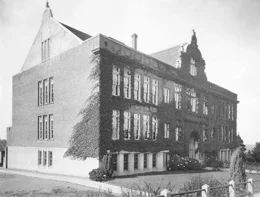
Emerson Elementary School in Seattle, circa 1920

Emerson Elementary School in Seattle, circa 1920

The Emerson community has been a long-term victim of institutional neglect — despite serving a high-need population, the school sees chronically low resources and high staff turnover. In a system whose schools in wealthy neighborhoods are propped up by parent donations, advocacy and involvement, the schools in lower-income communities are left to fend for themselves.

It’s no surprise, then, when these schools struggle. Emerson, for its part, was downgraded from a “priority school” to a “superintendent intervention school” after last spring, and nearly every teacher in the school exercised the accompanying opportunity to “displace” and leave Emerson.

Not surprisingly, almost every family in the neighborhood with privilege is also finding a way to choose another school — and why wouldn’t they? Kids of color, as a result, make up almost the entire student body at Emerson, and that has been true for years. Emerson draws from an extremely diverse part of town, but "diverse" means exactly that. There are plenty of white kids around the neighborhood, too. Most of them just aren't at Emerson.

On a state level, our schools have been under-funded for years, and the legislature seems if anything further from resolving the McCleary mandate than it was whenever we checked in last. And even if by some magic our schools are soon “fully funded,” Emerson’s issues will remain. Funneling more money into an inequitable system won’t solve issues of inequity.

The voices of the Emerson community began to be heard for the first time in a long time this fall when principal Andrea Drake’s leave of absence garnered some media attention. That led to a community meeting in November to discuss Emerson’s past, present and future with Kelly Aramaki, executive director of Seattle Public Schools’ southeast region, and our local school board rep, Betty Patu. It was an unexpected spotlight and an unexpected opportunity to change the course of our struggling school.

The following is an email sent from Kelly Aramaki to the Emerson mailing list on Monday, Dec. 12:

Dear Emerson Families,
Thank you for so warmly welcoming Dr. Drake back. I know that she appreciates the welcome and well-wishes she received from families, students and staff. Thank you also to those of you who were able to attend the Emerson family meeting with School Board President Betty Patu, myself and other district leaders on November 17. We recognize and acknowledge the challenges Emerson Elementary has faced over the years and the community’s concern about insufficient funding, support and attention. As Director Patu mentioned at the meeting, we are committed to doing better by Emerson students and community.
As promised at that parent meeting, this is a follow-up letter to share more information and to answer questions asked that evening. The following are key points we’d like to give more information on, as well as answers to questions raised that evening. We know that much more dialogue with the community is needed moving forward, and will use this is a starting point.
The Need for More Support for Emerson – One of the key points made that evening was the need for more support for Emerson than what has been given in the past. We agree. This year, the district has allocated additional family support to Emerson through a Family Engagement Coordinator who will work alongside Yolanda McGee, the Family Support Worker. We have allocated two building substitutes (one full-time, one half-time) to provide more consistent substitutes when teachers are out sick. We also allocated additional funding to make the counselor full-time. We are providing the school enhanced professional development support to support the teachers and staff. We are providing enhanced leadership support for the building administrators. Through the Families and Education levy funding, Dr. Drake and her team have also secured additional resources for students such as whole-child support in partnership with Seneca. We have also allocated an additional math specialist to support students who are struggling with math. Looking to next year, the district and school are working with the Seattle Education Association (teachers’ union) to pursue a new model for school improvement that leverages family and community engagement.
Recruiting the Best Teachers – One of the most important factors in a child’s education is the quality of the classroom teacher. A number of concerns were raised at the parent meeting regarding recruiting and retaining the best teachers. Last February, Dr. Drake and I, along with Ms. James and Ms. Dusin, went to the Washington Educator Career Fair at the Tacoma Dome to recruit and offer contracts to teachers who are not only extremely qualified, but also passionate about working in schools with a diverse community like Emerson. Human Resources has invited us to do that again this year to fill any vacancies with the best candidates. In addition, Human Resources is protecting Emerson from any forced-placed teachers. Any teacher who comes to Emerson will be interviewed and approved by an Emerson interview team. Our goal is to find, support and retain outstanding teachers who are committed to the Emerson community.
Concerns About Vacant Positions –  This year, we have struggled to fill two classroom teaching positions. Parent concerns were heard regarding the challenges of rotating substitutes in those classrooms. We now have long-term substitutes in place for both of those classes.  We will do better to ensure that students in those classrooms are receiving the same level of education as students in other classes. That includes getting regular homework and updates for parents on their child’s progress.
City Year & After School Activities – Due to the particular needs of Emerson students, the school decided to fund a partnership with Seneca instead of City Year, because Seneca’s program and services were more aligned with the needs and goals of the school. Regarding after-school activities, we have opportunities in place this year for students such as choir and instrumental music. Additionally, we have after-school academic supports for English Language Learners. The school is looking into other after-school opportunities for Emerson students for next year.
The Budget Crisis – Concerns about the current budget crisis, the “levy cliff” and how schools are funded were raised at the meeting. This is a concern that impacts all of our schools. We are doing everything we can to mitigate the impact of the budget cuts on our students and schools. For more information about the current budget crisis, we encourage you to attend a Community Budget Gap Meeting on December 15 from 6:30 – 8:00PM at South Shore PK-8 School or on January 3 from 6:30 – 8:00PM at Franklin High School. For more information on this, please go to www.seattleschools.org.
Future Parent Engagement – Parents asked about future opportunities for Emerson families to talk with school and district administrators. I will coordinate with Dr. Drake to provide future opportunities for families to talk directly with school and district administrators about Emerson Elementary and to get updates on how we are better supporting the school.
Those are all the updates we have for now. If you have any questions, concerns or suggestions, I encourage you to contact Dr. Drake at Emerson. She is more than happy to talk with you about the school’s vision and to receive any questions or feedback you may have. If your concerns are about district support for Emerson, please feel free to contact me as well. Both Dr. Drake and I are passionate about and committed to helping Emerson students succeed in school and in life. Our unified goal, along with the staff, is to make sure that Emerson becomes one of Seattle’s most successful schools for each and every student in the Emerson community.
Have a wonderful week and a joy-filled winter vacation.
Sincerely,
 
Kelly Aramaki, Executive Director of Schools
 

This is a very nice letter, and the community meeting was a great first step -- as long as it's a first of many steps. I wasn’t able to attend the meeting, so maybe I would feel differently had I been there in person, but I struggle to find hope in these words. Despite the best intentions, Julian’s school will still have TWO long-term substitutes for the rest of the year where there should be full-time teachers. This is not a road map for foundational, long-term change at a school that desperately needs it. It’s more of a list of current problems, immediate band-aids, and lofty aspirations.

But then again, what did I expect?

Too many low-performing public schools like Emerson seem doomed, forgotten, stuck getting by as best they can. It’s a systemic problem. Emerson Elementary School — and its students and families — are just victims of an unfair capitalist system of education. People like Betty Patu and Kelly Aramaki mean well, I'm sure -- they don’t have a foot on Emerson Elementary School’s back. They're working within the confines of the same inherently inequitable system.

For now, I think the key here is that our leaders are willing to listen. If this is a first step with bigger steps soon to follow, then great. If this is the best we can do, then Emerson is stuck. Either way, we still have work to do.

Catching up after a busy month

I'm home.

A lot, it turns out, happened while I was gone. And having spent most of the past month with little cell service and lots of things demanding my attention, I'm still getting caught up.

For starters, Donald Trump was elected president. That seems bad.

Trump has also nominated Betsy DeVos to be our new Secretary of Education. She supports charter schools, which seems good at first, until you find out she's obsessed with them in a bizarre, fairly extreme way. She also wants to "Make Education Great Again," which requires no dissection to be rendered obviously ridiculous (though I do look forward to dissecting it soon anyway).

But the point is, Trump and DeVos will be making decisions very soon that have very real implications for our kids. What will we do?

In Washington State, meanwhile, we showed our own backwater stripes and failed to elect Erin Jones to be our new state superintendent of public instruction. Instead, we shout hooray for Chris Reykdal, a white male career politician! He's the change we've been looking for, no doubt.

The frivolous challenge to Washington State's charter school law was dismissed, and the same law has since been called the strongest in the nation, so our locale hasn't been completely bereft of positive developments. Our budget crisis remains, however, and the broken systems that created the inequity are still the ones trying to fix it. We are still scales on a snake trying to eat its own tail.

Luckily, there's reason for hope. Our kids are beautiful geniuses, and we (their parents and their community) recognize this and love them all the more for it. They will not be denied the education they deserve. We won't stand for it.

Day 10 at Standing Rock: Kings Return


About the Music: “Kings Return”

From the musician, Cee Goods:

I wanted to end the awareness campaign with something powerful. Something that will last. Like Earth. Earth will beat out all our human greed. I pray we can unite to respect this miracle we live on.


From Matt:

I ate Thanksgiving dinner today, but we called it by many different names. Forgiving Day. No Banksgiving. Native Feast Day was my favorite.

We were all invited to the community high school in the nearby town of Cannon Ball, and the community served and ate dinner with us.

A Lakota elder spoke to the crowd first. He told his people's story of the black snake and sang a prayer song.

Then he thanked his Lakota brothers and sisters for being there, and said that we were all Lakota. That we were all living out the values of peace, love, protection and unity.

I thought I was coming to Standing Rock to serve. To help. To offer up my privilege and stand up against something.

It's that, for sure, but it's also much more. It turns out the "Lakota way" is pretty simple: to be your purest, best self every moment of the day. There is no protest, because there is only one way to live.

If we heal ourselves, we can heal the sickness threatening to flow into that pipeline.

Every moment is another chance to live like a king again if you choose to love yourself. If we do that, we will all be living in resistance. We will all be standing with Standing Rock in the most profound way possible. I would be thankful if you would join us.


#NODAPL #DAPL #CeeGoodsProduction #MattHalvorson #StandingRock #Unity #Community #Earth #Preserve #Water #Life #Love #Fight #Together #Peace #WaterProtectors #Beats #HipHop #Portland

Day 9 at Standing Rock: Major Keys

About the Music: “Major Keys”

From the musician, Cee Goods:

Every move we make is major. We are all in this together, and together we can take down corporations. They need us, they need our money. We can fight and win the war. 

 "I am not god. We are God."

I love my family and my friends with intensity. It's part of what fuels me every day. And I love them actively — especially my family. We support each other, and we fit into each other's lives as part of a little web, an ecosystem almost. We hug and hold each other and help connect each other to the real beauty of deep, unshakable love.

The pain of Standing Rock has finally started to make the news. But the magic of Standing Rock is that so many people here are somehow learning to love everyone else with that same intensity and activity. In the old world, we were strangers. In the New World, we are brothers and sisters, parents and grandparents and children, and we treat each other that way. We live with the Earth, not on it.

Written behind Emma in this photo are the camp's direct action principles, led by the ideas of protection over protest, prayer and love over fear and reaction. Standing Rock can change the world because it is not simply about standing up to injustice and declaring that it's wrong. It's about saying enough is enough, and living differently come hell or high oil prices.

There's a reason "All You Need is Love" was the first satellite broadcast on planet earth. It's probably the truest thing anyone's ever said.

The best thing you can do to support Standing Rock this minute — and every minute — is to love everyone in your life as gently and intensely as you can. Then make the decision to share that love with the next person, too.

I am not god. We are God. And if we all realize that, we will change the world.

Day 8 at Standing Rock: Diamond

IMG_1144.JPG


About the Music: “Diamond”

From the musician, Cee Goods:

The sample says, "Darkness falls, may it be, your heart remains true." I chose this because it embodies the courage each protector is sacrificing for the better of millions of people in this country.


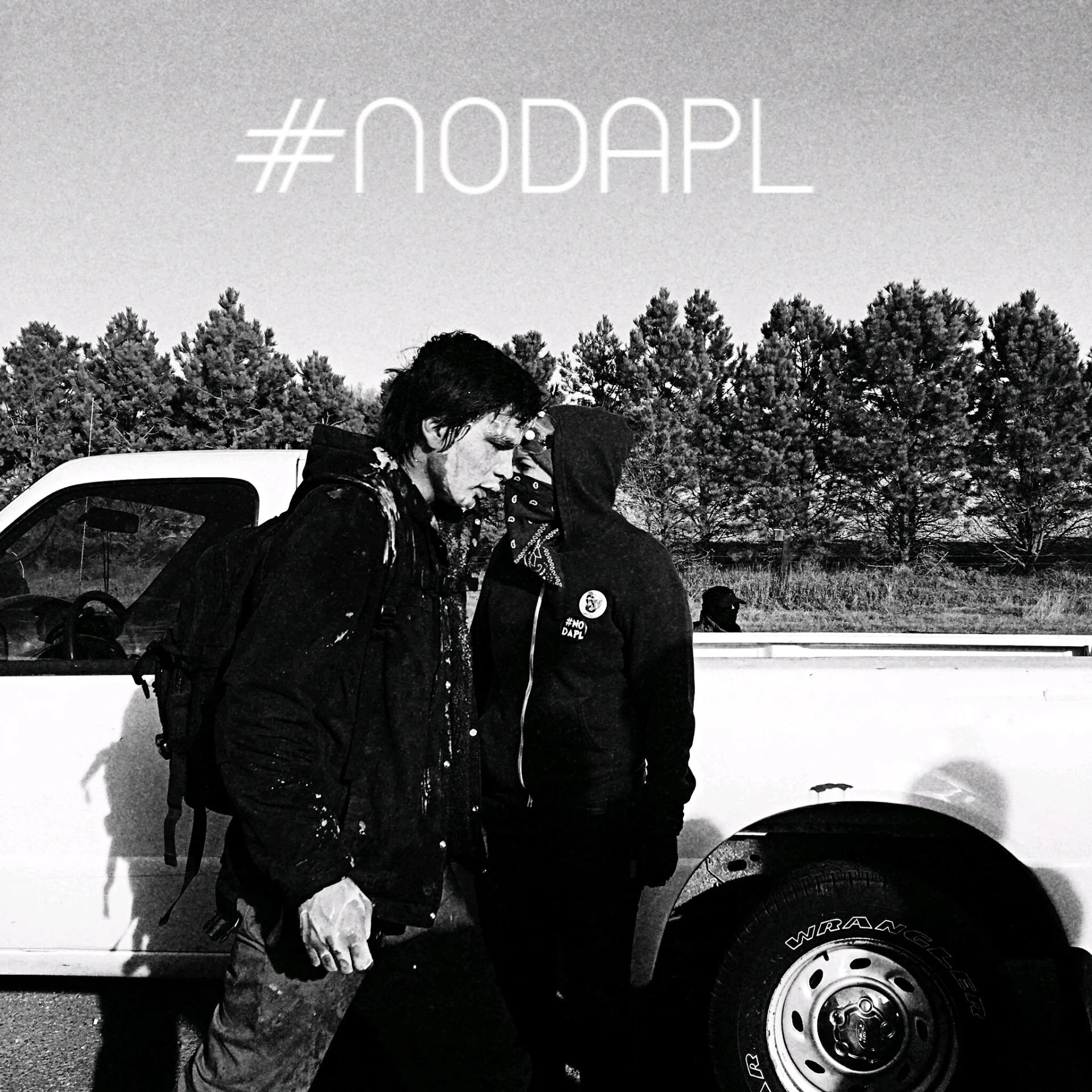
This man was sprayed in the eyes at point-blank range with OC spray — normally used during prison riots, where it's also inhumane. His face is covered with milk of magnesia, offering only the slightest relief.

That was more than a week ago, and the use of force by police has only escalated since.  An unarmed woman may have lost her arm to a concussion grenade yesterday. A 13-year-old girl was shot in the face with a rubber bullet. An elder went into cardiac arrest and was revived on the scene, remaining in critical condition. Hundreds were injured.

Let's just be clear about what's happening: the police are protecting the interests of a private corporation with military force. Our president knows this is wrong and has said as much, but he has not stopped the pipeline. Even Obama is under the thumb of big oil.

We must band together now to save ourselves. Nobody will do it for us. Use your platform, whatever it is, to educate your circles and share your passion about this issue.

Take your money and your debt out of the big banks supporting the pipeline. Close your accounts. Call local police and government. Do everything you can. Now is the time we reclaim our respect for the Earth and each other.


#NODAPL #DAPL #StandingRock #CeeGoodsProduction #MattHalvorson #Together #Community #Unity #Earth #Preserve #Life #Love #Water #Peace #Beats #HipHop #Portland

Day 7 at Standing Rock: Judgement Day

About the Music: “Judgement Day”

From the musician, Cee Goods:

The energy feels like it's coming soon. People are going to have to make conscious decisions of how they want our future to look. Are you with good? Or are you with greed?

An old Lakota prophecy says that a black snake will tear through the continent, ravaging the Earth and endangering all life on the planet if it is allowed to take hold. Similar prophecies exist across many different tribes, as do foretellings of the importance of the Seventh Generation in defeating the serpent and preserving life on Earth.

Many believe that the Dakota Access Pipeline (DAPL) is the fabled black snake.

I have gotten to know a number of strong, proud, brilliant young Lakota men and women during my time here. They're a little younger than me, which makes them part of the seventh generation of their people to be born since their first contact with white European invaders. I'm not alone in sensing the power that flows through them from their ancestors. If you met them, I think you, too, would believe that we have all been called here to fight for Mother Earth as brothers and sisters.

We are the Black Snake Killers.

From Chief Arvol Looking Horse of the Lakota, Dakota and Nakota nation:

"A "disease of the mind" has set in world leaders and many members of our global community, with their belief that a solution of retaliation and destruction of peoples will bring Peace.

In our Prophecies it is told that we are now at the crossroads: Either unite spiritually as a Global Nation, or be faced with chaos, disasters, diseases, and tears from our relatives' eyes.

We are the only species that is destroying the Source of Life, meaning Mother Earth, in the name of power, mineral resources, and ownership of land, using chemicals and methods of warfare that are doing irreversible damage, as Mother Earth is becoming tired and cannot sustain any more impacts of war.

I ask you to join me on this endeavour. Our vision is for the Peoples of all continents, regardless of their beliefs in the Creator, to come together as one at their Sacred Sites to pray and meditate and commune with one another, thus promoting an energy shift to heal our Mother Earth and achieve a universal consciousness toward attaining Peace.

As each day passes, I ask all Nations to begin a global effort, and remember to give thanks for the Sacred Food that has been gifted to us by our Mother Earth, so the nutritional energy of medicine can be guided to heal our minds and spirits.

This new millennium will usher in an age of harmony or it will bring the end of life as we know it. Starvation, war, and toxic waste have been the hallmark of the Great Myth of Progress and Development that ruled the last millennium.

To us, as caretakers of the heart of Mother Earth, falls the responsibility of turning back the powers of destruction. You yourself are the one who must decide.

You alone - and only you - can make this crucial choice, to walk in honour or to dishonour your relatives. On your decision depends the fate of the entire World.

Each of us is put here in this time and this place to personally decide the future of humankind.

Did you think the Creator would create unnecessary people in a time of such terrible danger?

Know that you yourself are essential to this World. Believe that! Understand both the blessing and the burden of that. You yourself are desperately needed to save the soul of this World. Did you think you were put here for something less? In a Sacred Hoop of Life, there is no beginning and no ending!"

Day 6 at Standing Rock: Life is Sweet

Life is Sweet. We value our lives. They can try and attack with any means of weaponry, but it does not match the level of commitment to stopping this pipeline. Our lives are worth too much.

About the Music: “Life is Sweet”

(co-produced by Old Gold; vocals by @frankstickemz - aka Flowzavelt)

From the musician, Cee Goods:
Life is sweet. We value our lives. They can try and attack with any means of weaponry, but it does not match the level of commitment to stopping this pipeline. Our lives are worth too much.

(The following are actual text messages I sent to Spencer (aka Cee Goods) on Sunday, Nov. 20, 2016. It was too hectic to write anything coherent.)

"Please share, protest, donate - do whatever you can do. What is happening at Standing Rock is happening to all of us... whether we realize it or not."

"I fell asleep sitting up in my car from about 430 to 630. Woke up and something was going down off in the main camp in the distance. Police cars, and a call for all the protectors to come to the bridge [on Highway 1804, which has been blockaded and closed for several weeks]."

"Police are definitely here, but it's not clear if they are the perpetrators or if it's DAPL."

"Can't get through on twitter or Facebook right now. Two planes and a helicopter circling constantly right now. Lots of people shot with both gas and rubber bullets in face and chest. People have gotten tear-gassed, they're using a water cannon to soak people and things."

"Concussion grenades and rubber bullets. Shit is going down. Someone has already left in an ambulance. There are no reporters or news outlets here."

Day 5 at Standing Rock: The Stand-Off

How much can we take? Something has to give. We pursue with positivity, but has it reached a limit? Do we retaliate with the same energy that is received? Energy is shifting. Something is on the horizon.

About the Music: “The Stand-Off”

From the musician, Cee Goods:
How much can we take? Something has to give. We pursue with positivity, but has it reached a limit? Do we retaliate with the same energy that is received? Energy is shifting. Something is on the horizon.

We are here as protectors, not protesters. This young man threw himself down onto the tracks separating militarized police from peaceful demonstrators, a visible act of prayer.

As we eventually tried to leave the scene, however, police advanced. People were sprayed at point-blank range with OC gas -- a riot-caliber tear gas used in prisons. Women and Native elders were accosted and thrown to the ground. Many were arrested, many were injured.

It is said that capitalism becomes fascism when the government begins protecting the interests of corporations over people. We have long-since crossed that threshold. Please stand with Standing Rock to take back the power from the corrupt, morally bankrupt oil barons and give it to the people.

Our country was founded on a genocide of the indigenous people, and our legacy of "freedom" has been built on oppression and lies.

Will you stand by as our government attempts to quietly break another treaty? Will you stand by as our president-elect promises to abuse his power and double down on racist division and oppression?
Or will you stand with all people, with the Earth itself, by standing with Standing Rock?

Let's make America great again, just like it was when we found it.

Gwen Frost is a student in Bellingham, Wash. She grew up in Portland, Ore. She was sprayed in the eyes at point-blank range with OC gas by police in Mandan, ND. Why? Because she is peacefully standing up for what she believes is right, and that goes against the interests of the biggest pile of money.

Day 4 at Standing Rock: DreamsVille

Uploaded by Matt Halvorson on 2016-11-18.

About the Music: “DreamsVille”

From the musician, Cee Goods:
What foundation is this country built on? What values do we hold true for the land? Is it all but a dream? Do we as Americans live in a fantasy world? The harsh reality is nothing is ever what it seems.

The American flag is supposed to be hung upside down only in times of dire distress. I took this photo in Camp Oceti Sakowin at Standing Rock the morning after Trump's election, but every American flag in the community had been signaling distress for months.

The Dakota Access Pipeline, or DAPL (pronounced dapple), is the source of this distress, the source of the evil that is being confronted.

DAPL is spraying the camps with chemicals from low-flying planes at night. They have donated poisoned food. They are surveilling and infiltrating the camp.

They have herded up most of the wild buffalo in the region and are keeping them in pens without food or water. Sixteen had already died as of a couple days ago. I'm sure many more have already been lost.

The protest action that makes the news is real, but it is a distraction. The police are just a pawn in this game, and the fate of Mother Earth is at stake. The real atrocities are being generated and perpetrated by DAPL, the vastly monied corporation the police are protecting at the expense of the people.

We need your help. We are under constant attack. We are in dire distress, and so is our nation. Please stand with Standing Rock today by turning your flag upside down.

Day 3 at Standing Rock: End of Trump

Uploaded by Matt Halvorson on 2016-11-18.

About the Music: “End of Trump”

From the musician, Cee Goods:
High intensity, ready for anything. Will reach what you seek by any means necessary.

I took the above photo while wearing ear protection, eye protection and a surgical mask, standing across the railroad tracks from a row of militarized police assembled in a line to face off with peaceful demonstrators. Armed with tanks, sound cannons, tear gas, tasers, batons and guns, they flex their muscle against the people they are sworn to protect, instead defending the interests of a corporation.

They stand against the people as a symbol of capitalist greed and fear, misguided stormtroopers defending a dark empire.

Even more powerful than their terrible might and aggression is the power of love and prayer being reflected back at them. We are protecting this water for those officers, too, and for their children. And we've told them so. And then they've attacked.

We pray that love will replace the fear and that our connection to the earth and each other can overcome the divisiveness that stands in our path.

Day 2 at Standing Rock: K.I.N.G.S.

Uploaded by Matt Halvorson on 2016-11-18.

About the Music: “K.I.N.G.S.”

From the musician, Cee Goods:
Because everyone standing at Standing Rock resembles true power and leadership. The commitment, the unity, the fight. All are worthy of being a king for this land. The beat shares a distant war cry in the back, but includes peaceful flutes demonstrating the protests in full.

The folks living in these teepees in the photo above were my first neighbors at Oceti Sakowin, the largest of the three main camps of people at Standing Rock.

Supporting the direct acts of prayer and protest on pipeline work sites is an entire community of people, many of whom never approach the "front lines." Oceti Sakowin had seven separate kitchens when I arrived, all of which arose organically out of a need in that particular area of the camp. Across the river to the north are two more camps, Rosebud and Sacred Stone, which sit on the southern edge of the Standing Rock Indian Reservation.

Throughout the combined camps, needs are met as they arise. Several medical tents provide care of all kinds for anyone who asks. It is common to find donation tents as well, filled with clothes, blankets, camping gear and other supplies to be taken as needed. Everyone gives freely and takes only what they can't do without.

These prayerful, integrated communities make possible the more "newsworthy" direct action, and they are open to all. They are open to you, as soon as you decide to come and stand with Standing Rock.


Day 1 at Standing Rock: Dark Love

About the Music: “Dark Love”

From the musician, Cee Goods
I wanted to find a powerful yet peaceful instrumental which sheds positive energy, but still is strong and forceful.

The photo in the video above is me at the Standing Rock Indian Reservation in my home state of North Dakota.

I just drove out here from my adopted home of Seattle, because nothing is more important right now than what’s happening here.

The prayer camps springing up organically at Standing Rock are an example of fully communal, off-the-grid, back-to-the-land living, and the spiritual power here is overflowing. I am overcome and moved to tears multiple times a day, every day. I’m kind of a softy in general, but this is something else.

I know this blog is usually hyper-focused on schools and education, usually back in Washington State. But everything that is happening here at Standing Rock is happening for a cause. For every cause. This is about racial justice, social justice, environmental justice, economic justice, political justice, and about truly getting back in touch with the land, with our Mother Earth.

Standing Rock has been the front line of these battles for the better part of a year now. Trump’s election has intensified that reality nationwide (though I have been told that whichever candidate won, most expected the struggle to continue. As one Lakota man said to me, “We have never had an ally in that office.”), and the camp has grown noticeably since the election.

This place, what’s happening here, the community that’s steadily building…it is unlike anything that any of us, I promise you, have ever experienced. People are being drawn to this sacred land on the prairie for reasons they can’t fully explain, myself included.

Everyone is accepted and appreciated here. People who have been oppressed or unseen for generations are lifted up, and the privileged among us are expected to both leave our privilege at the door and to exercise it when it can benefit the community.

We are acting out the love and community and respect for the Earth that will save our country and our planet, if it is to be saved. Whatever your cause, it is calling to you now.

Please join us.

Here’s where to start:

Look over the Standing Rock Syllabus, an academic-style explanation of settler colonialism and the treaties and history specific to this region.

Take action through nodaplsolidarity.org. 

#NODAPL

10 Days, 10 Photos, 10 Songs: An Awareness Campaign for Standing Rock

For the next 10 days, I am collaborating on a Standing Rock awareness campaign with Cee Goods (who also happens to be my brother-in-law). He will be creating one instrumental track each day, each based on a photo I have taken at Standing Rock. This will end on Thanksgiving, because the way of life and respect for the land that the Native Americans have always fought for and tried to preserve still rings true today.

Day 1: "Dark Love"
Day 2: "K.I.N.G.S."
Day 3: "End of Trump"
Day 4: "DreamsVille"
Day 5: "The Stand Off"
Day 6: "Life is Sweet"
Day 7: "Judgement Day"
Day 8: "Diamond"
Day 9: "Major Keys"
Day 10: "Kings Return"


Seattle students rise up and walk out

Five days after Democratic nominee Hillary Clinton conceded the 2016 presidential election to Republican Donald Trump — a man who, in case a reminder is necessary, announced his presidential campaign in the same speech in which he called Mexican immigrants "rapists," suggested barring all Muslims from entry into the United States and has been accused of multiple cases of sexual assault and harassment — thousands of Seattle high-school students walked out of class to protest Trump's electoral win. 

All told, more than 5,000 students from 20 high schools and middle schools participated in the #NotMyPresident walkouts and protests, according to KIRO's Graham Johnson

The courage of these students' convictions is beautiful and emboldening — and should be eye-opening for those of us who, unlike the vast majority of these student protesters, actually had a say in the how the 2016 election would shape the future in which these kids must live. The Seattle Post-Intelligencer pointed out the threat that Trump's nativist, Draconian immigration policies pose to the younger generation in particular. 

Trump’s proposals and attitude towards immigrants stirred fear and outrage during the campaign, emotions that are now, belatedly, being voiced on the nation's streets. The president-elect has promoted a ban on Muslim travel into the United States, severe restrictions on legal immigration and a “deportation force” targeting undocumented residents.

Children would likely bear the brunt of Trump’s proposals, if enacted.

About 800,000 undocumented children and youths who were brought to the United States by their parents came out of hiding during President Obama’s administration. Obama issued an executive order in 2012 halting the deportation of immigrant children who arrived before age 16; those children are now known to the government and would be at risk for deportation if Trump rescinds that order.

Trump has also pledged to cut all federal funding to “sanctuary cities” like Seattle. As a sanctuary city, Seattle does not put its resources toward enforcing federal immigration laws, nor do city workers inquire about residents’ immigration status.

Seattle’s immigrant community includes a large concentration of Muslim refugees from East Africa. Trump denigrated Somali immigrants on the campaign trail, and has spoken against accepting non-Christian refugees.

Despite their inability to affect electoral outcomes at the ballot box, these student protestors raised their voices to be heard by those who can. 

Two 12-year-old Latinas from Denny International Middle School walked together with friends, holding signs. Jennifer Garnica's sign read, "Education, not deportation," while her companion, Mariana Ortega, held a sing saying, "Latinas are united."

"We want to change Trump's thoughts about us. We gotta stick together," Ortega said, adding that young Latinas need adults to help represent their interests at the ballot box. "People can vote and they can vote for us since we can't vote."

...

“We feel we have a candidate who is jeopardizing the country. How can he speak for anybody but himself?" said Bryce Groen, 16, class of 2019.

Even though the students are too young to vote, Groen said, they need to be heard because Trump is shaping the world they are going to inherit.

Kudos to the student protestors of Seattle — and all those across the country — for recognizing injustice when they see it and using their voices to speak on it.


Louie Opatz is a freelance writer living in south Seattle.
See and hear more of his work at www.LouieOpatz.com.

'We are not protesters. We are protectors.'

I have been at the Oceti Sakowin camp near the Standing Rock reservation in North Dakota since Monday. The Native elders are the spiritual and strategic leaders here, and they have made it very clear that this isn't a protest camp, but a prayer camp. We are not here to be protesters, but protectors — protectors of sacred land and sacred water.

"This is kitchen wood. Please do not take."

The camp is unlike anything I've ever experienced. An estimated 4,000 people (with people coming and going constantly) are living in commune in the camps, which are all connected or easily walkable and sit both on Army Corps of Engineers land as well as on the Standing Rock Reservation. The camp offers medical and mental health services, daily orientations and trainings for newcomers, free in-depth legal support, media relations services, and seven different kitchens cooking and serving huge (astoundingly delicious) meals three times daily. And there's even coffee every morning, which makes all things possible.

I expected that there would be a constant protest or sit-in happening on the "front lines," that a continuous physical presence was necessary to prevent construction from continuing, but that isn't exactly the case. Last week, the Red Warrior Camp, which had been on the front lines, was raided by police, who used clubs, rubber bullets, tear gas, pepper spray and sound cannons to drive the men, women, children and elders from their homes at the camp.

I followed a plume of black smoke to its source this week and found people burning the tents and supplies that remained from Red Warrior Camp. DAPL (pronounced "dapple," short for Dakota Access Pipeline) security guards had urinated and defecated on whatever they could find — tents, teepees, blankets, even food.

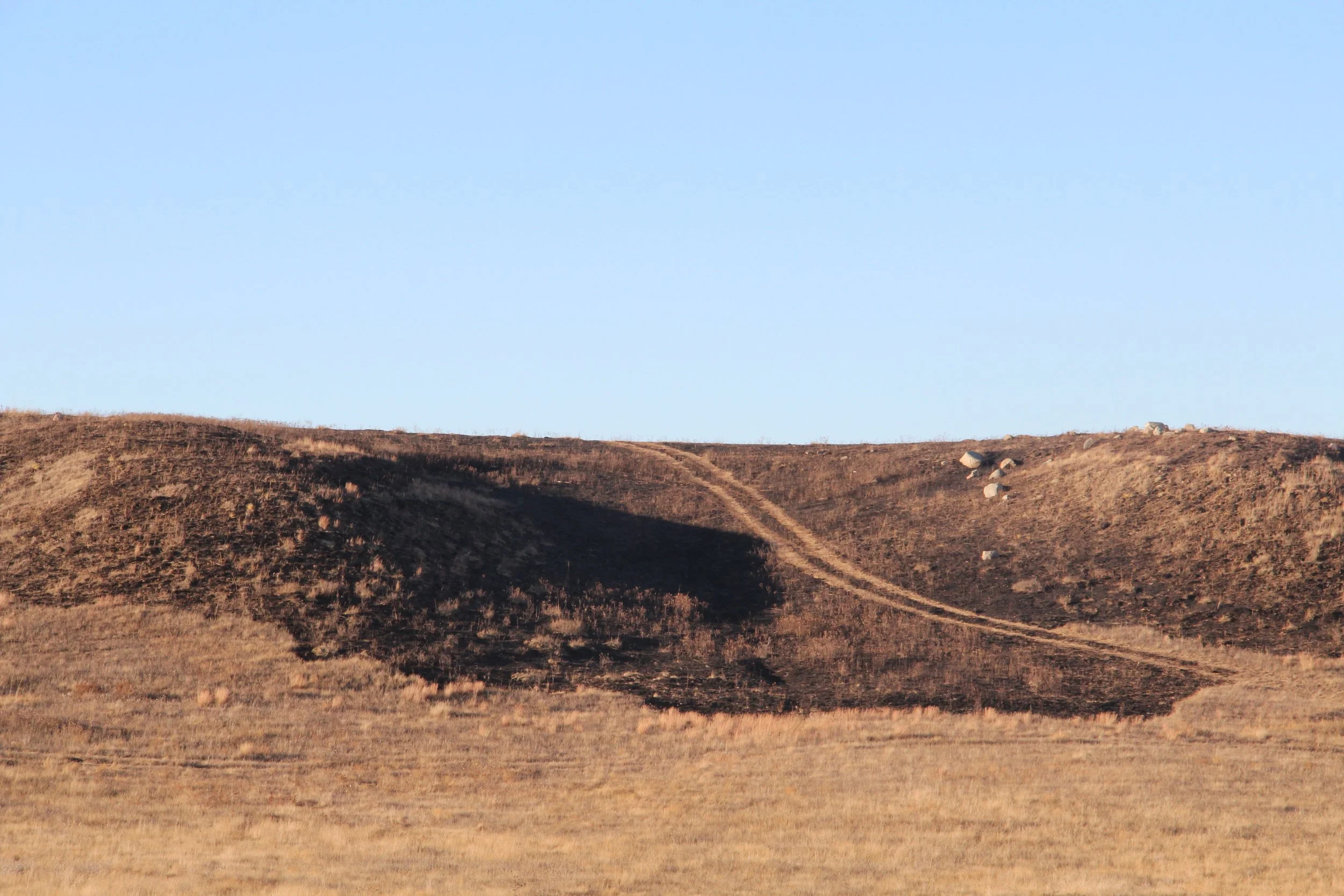
DAPL continues to try to intimidate in a variety of ways. Privately hired helicopters circle the camp frequently — especially at night, when helicopters are also joined by a small plane flying with no lights. They leave the flood lights on at the pipeline work site all night long. They set fire to a hilltop just across from the camp, scorching the dry ground (right).

We are asked not to photograph and take video of any ceremony, and much of what happens here is considered ceremony. On top of that, the camp operates under "security culture," as police and DAPL security contractors are monitoring cell phone communications in the camp and interrupting cell phone service. Everyone at the camp is operating under the safe assumption that DAPL and law enforcement also have "secret agents" in the camp. (Seriously. It's real. I watched camp security chase a DAPL agent away in his car just last night. And look at this screenshot from my phone, which has given me this warning many times already.)

The weather has been beautiful, but it is already getting very cold out here at night. The last two nights I have heated large rocks over a fire, wrapped them in towels, and put one at my feet in my sleeping bag while cuddling the other. It helps. It got down to 12 degrees a couple nights ago. I fall asleep listening to the sounds of people and coyotes howling from all directions (while wearing two pairs of socks, long johns, pants, and four shirts and sweatshirts plus a hood). So, you know, it's pretty much like home.

This has already been a very emotional, unexpectedly spiritual experience. Each camp has a sacred fire that burns continuously and is meant for prayer and meditation. Only cedar, tobacco and sage, which grows wild all around the area and is used to cleanse the air as well as the spirit, can be put into the sacred fire. I have participated in a traditional water ceremony, drinking a small handful of sacred water before walking to the river to give an offering of tobacco while singing traditional songs and connecting with the presence of our ancestors. I've watched a hawk come out of nowhere to circle overhead as a young man presented a staff he had painted and adorned with feathers and symbols to represent his brothers who couldn't join him.

Almost everything that happens feels so full of meaning and spiritual significance that it's palpable throughout the camp. I have met people from every part of the country and many parts of the world. I have been told many times that if this struggle has touched you in some way, if it has tugged at you, that you have been called to be here, and that really feels true. This struggle represents the intersection of so many issues: the power of corporations vs. the power of the people, the sovereignty of indigenous people and our own respect for treaties, oil barons vs. conservationists, and the fight for racial equity, just to name a few.

I have also found myself at the intersection of my past and my present. I grew up in Fargo (where I also usually slept in a sweatsuit and socks, incidentally), but as a kid who just wanted to play baseball and run around in the sun, I could never understand why we were there. A week or more would pass each winter when the high (the HIGH) temperature never got above zero. I vividly remember a radio host laughing and telling us one day that it was 70 degrees colder outside than in our fridge. Woof.

But suddenly, Standing Rock has made growing up in Fargo "make sense." If I'd grown up where I wanted to, I would not be here today. I don't fully understand what compelled me to up and drive out here, but having been here for several days, it does feel like I was called. I don’t know what to make of it.

I'm told often to ask everyone in my own community — in other words, you — to pray, whatever that means to you, for the safety of the people at the camp and the water we are protecting. Pray that the police officers, DAPL agents and all those supporting the pipeline are moved to love and compassion. Pray for our country and for the Earth Mother, as the Lakota call her. This is more than just an issue of one pipeline. Every one of us will be affected by what is happening here.

A Letter Home from the Road to Standing Rock

Dear Julian and Zeke,

I'm on my second day of driving. If I keep going, I should get to the camp at Standing Rock just before midnight. A corporation is trying to dig an oil pipeline across the Midwest, and it endangers the water used by millions of people. They are also trying to dig up sacred land that is protected for use by the Lakota tribe. They have been making a brave, peaceful stand for months now, and the pipeline still isn't finished. I'm going to help however I can.

I wish you could be here with me. Or that we were all going somewhere else for a different reason. Because I saw vultures today with their drooping necks and had no one to point them out to. And nobody laughed at me when I whooped out a little shriek because a hawk swooped so close to my windshield I thought he was going to grab me pull me out through the glass.

I overheard a guy in a cowboy hat tell people what he would do if he had his druthers. I saw a barn door built into the side of a hill like the Batcave. I saw horses in every combination of colors, I saw cattle and sheep grazing, and I saw a buttes and mountains frame the big Montana sky.

And I saw a train go by that just had the name "Mr. Rogers" graffitied onto its side, but without you here, I just saw it. I didn't laugh about it or try to explain why it's funny, and I won't remember it for long. Or maybe I will, since I'm writing to you about it.

Anyway, I've also had a lot of time to think. What am I doing? And why?

Even having lived elsewhere for a number of years now, I've spent about half my life in the Dakotas. But I did so through a settler's lens, and I learned and know very little about the indigenous tribes, or about the different reservations even. We did learn about "manifest destiny," though, which certainly didn't seem good or right, but it was presented to me as acceptable, so I accepted it. I was a kid. Like you are now. And I'm writing to tell you now that this is not acceptable, and it never has been.

I'm going to Standing Rock because if this happens, then things are no different than the "past" I learned about as a student. If I stay home now, then I am no different than the people whose apathy tens and hundreds of years ago looks so inconceivable now in retrospect.

I am going because I can, which means that if I don't, it's only because I have the privilege of being too afraid.

It was a clear, beautiful day today. By the time I got near Miles City, the sun had started to think about setting. I wasn't sure, but this seemed like my last best chance to get some gas and some food and some long underwear. I was anticipating a beautiful, huge sunset, and I had vague plans to stop at the side of the road to take pictures of it. But I lingered too long in town, just looking at trinkets and reshuffling things in the car, and I missed it.

By the time I had started driving again, the sun had set. I think I was nervous to start the last leg. Miles City is the spot on the map I had picked to leave the more familiar I-94, which runs through Fargo and becomes the same route I took with my family as a child when we would visit my grandparents in Minneapolis and St. Paul. Anyway, I'm turning east now because I've heard there is a police blockade on the highway coming into the camp from the north and that the road is closed.

So, I'm driving in the dark across the western edges of the prairie, through towns I haven't even heard of. I don't know what I'm going to find. I don't know what impact I can have, if any. But by writing to you, I at least feel like I understand a little better why I felt like I needed to come out here. I hope you do too. I miss you already.


Dad

It's about the 100% of Black children: the 94% in traditional schools and the 6% in charter schools

It's about the 100% of Black children: the 94% in traditional schools and the 6% in charter schools

Black parents do not have time for this distracting “divide and conquer” strategy pitting the NAACP Moratorium versus education reformers.

News flash: the pre-K-through-12 education system is not about the grown folk and their feelings! It is about ensuring all children, regardless of their zip code have equitable access to safe school environments and quality educational opportunities – period!

Read More

SPS put Emerson principal on leave after visit from school board rep

Last week was an exciting week in Seattle Public Schools. The city's teachers boldly came together to declare that Black Lives Matter, igniting support from the district and the community.

That all overshadowed a difficult week at Emerson Elementary, however. Parents were informed last Sunday (Oct. 16) that second-year principal Andrea Drake would be going on leave, and it's not clear if or when she will return. For now, Drake will be replaced on an interim basis by Barbara Moore, who will presumably do for Emerson what Frank Robinson did for the Washington Nationals a decade ago: come out of retirement to sleep-lead through a transition.

This is from the email to families from Kelly Aramaki, executive director of schools for SPS' southeast region:

“I am writing to let you know that Dr. Andrea Drake, Emerson's Principal, is currently on leave. During her absence, Ms. Barbara Moore, retired principal of South Lake High School, has graciously agreed to step in as acting principal. Ms. Moore is one of Seattle's finest leaders and will be a strong and steady support during this time. Ms. Moore and Ms. James, Emerson's Assistant Principal, will be working closely together and with the staff to ensure that everything moves forward smoothly. Your child's learning is our number one priority.”

As I understand it, Principal Drake did not volunteer to take a leave of absence. Seattle School Board member Betty Patu visited Emerson recently and met with some teachers. I don't know what exactly Patu was told or what she discovered, but something about the conditions at Emerson prompted Patu to go directly to Aramaki, who saw fit to place Drake on leave.

Drake had reportedly mismanaged the levy process as well, but whether or not there is any substance to that rumor, Drake’s brief tenure at Emerson has been far from smooth.

My son goes to Emerson. Principal Drake took the helm just prior to the start of the 2015-16 school year, and from one parent's perspective, the school has languished in low expectations for its students ever since. Last fall's curriculum night, for instance, was far more focused on the importance of attendance and uniforms -- essentially showing up and wearing the right clothes -- than anything academic, let alone anything rigorous.

Last summer, state superintendent Randy Dorn changed Emerson's designation from a "priority school," which it had earned due to persistently low test scores, to a "superintendent intervention school." This change gave the school's teachers an option to stay at Emerson or leave to pursue other positions within the district. Almost every teacher left.

Working conditions at the school seem to have remained unkind to its teachers this fall. Emerson still does not have a teachers union representative.

When SEA voted unanimously to wear custom Black Lives Matter shirts on Wednesday, Oct. 19, teachers at Emerson asked to take part. Principal Drake's response to her staff’s request to participate was a firm "NO." Then she explained herself by telling her teachers that "all lives matter.”

She’s entitled to her beliefs and her own ideology, but if that’s the culture being established at my son’s school, then I appreciate the change of leadership. It’s not that I take issue, necessarily, with this particular example of upheaval at Emerson.

I take issue with the larger pattern of constant turnover and consistent underachievement at the school. I take issue with the fact that we have every reason to believe this will just keep happening.

So, Barbara Moore becomes Emerson's third principal in three years and its fourth in the past five. For the most part, our neighbors with access to other schools will continue exercising that option and avoiding Emerson altogether.

And who could blame them?

The building is home to some excellent, dedicated teachers and support staff, but they need more help. Emerson is also home to a few hundred beautiful little kids and their families, and we’re depending on our leaders in the district and on the school board to step up and give our kids the education they deserve — or at least something equivalent to the education most students on the north end are already getting.

It seems clear that our state superintendent (Dorn), our region’s ED with SPS (Aramaki) and our locally elected school board rep (Patu) are all well aware of the problems at Emerson.

Our leaders know that our school is failing us. This is, in theory, why we elected them, why our taxes pay their salaries. They are our advocates, a mouthpiece for the students and families in the communities they serve. And they know that our kids are being treated inequitably.

So, what’s going to be different this time? What will be done to change Emerson’s future and give our kids access to the education they deserve from their neighborhood school?