It's about the 100% of Black children: the 94% in traditional schools and the 6% in charter schools

It's about the 100% of Black children: the 94% in traditional schools and the 6% in charter schools

Black parents do not have time for this distracting “divide and conquer” strategy pitting the NAACP Moratorium versus education reformers.

News flash: the pre-K-through-12 education system is not about the grown folk and their feelings! It is about ensuring all children, regardless of their zip code have equitable access to safe school environments and quality educational opportunities – period!

Read More

SPS put Emerson principal on leave after visit from school board rep

Last week was an exciting week in Seattle Public Schools. The city's teachers boldly came together to declare that Black Lives Matter, igniting support from the district and the community.

That all overshadowed a difficult week at Emerson Elementary, however. Parents were informed last Sunday (Oct. 16) that second-year principal Andrea Drake would be going on leave, and it's not clear if or when she will return. For now, Drake will be replaced on an interim basis by Barbara Moore, who will presumably do for Emerson what Frank Robinson did for the Washington Nationals a decade ago: come out of retirement to sleep-lead through a transition.

This is from the email to families from Kelly Aramaki, executive director of schools for SPS' southeast region:

“I am writing to let you know that Dr. Andrea Drake, Emerson's Principal, is currently on leave. During her absence, Ms. Barbara Moore, retired principal of South Lake High School, has graciously agreed to step in as acting principal. Ms. Moore is one of Seattle's finest leaders and will be a strong and steady support during this time. Ms. Moore and Ms. James, Emerson's Assistant Principal, will be working closely together and with the staff to ensure that everything moves forward smoothly. Your child's learning is our number one priority.”

As I understand it, Principal Drake did not volunteer to take a leave of absence. Seattle School Board member Betty Patu visited Emerson recently and met with some teachers. I don't know what exactly Patu was told or what she discovered, but something about the conditions at Emerson prompted Patu to go directly to Aramaki, who saw fit to place Drake on leave.

Drake had reportedly mismanaged the levy process as well, but whether or not there is any substance to that rumor, Drake’s brief tenure at Emerson has been far from smooth.

My son goes to Emerson. Principal Drake took the helm just prior to the start of the 2015-16 school year, and from one parent's perspective, the school has languished in low expectations for its students ever since. Last fall's curriculum night, for instance, was far more focused on the importance of attendance and uniforms -- essentially showing up and wearing the right clothes -- than anything academic, let alone anything rigorous.

Last summer, state superintendent Randy Dorn changed Emerson's designation from a "priority school," which it had earned due to persistently low test scores, to a "superintendent intervention school." This change gave the school's teachers an option to stay at Emerson or leave to pursue other positions within the district. Almost every teacher left.

Working conditions at the school seem to have remained unkind to its teachers this fall. Emerson still does not have a teachers union representative.

When SEA voted unanimously to wear custom Black Lives Matter shirts on Wednesday, Oct. 19, teachers at Emerson asked to take part. Principal Drake's response to her staff’s request to participate was a firm "NO." Then she explained herself by telling her teachers that "all lives matter.”

She’s entitled to her beliefs and her own ideology, but if that’s the culture being established at my son’s school, then I appreciate the change of leadership. It’s not that I take issue, necessarily, with this particular example of upheaval at Emerson.

I take issue with the larger pattern of constant turnover and consistent underachievement at the school. I take issue with the fact that we have every reason to believe this will just keep happening.

So, Barbara Moore becomes Emerson's third principal in three years and its fourth in the past five. For the most part, our neighbors with access to other schools will continue exercising that option and avoiding Emerson altogether.

And who could blame them?

The building is home to some excellent, dedicated teachers and support staff, but they need more help. Emerson is also home to a few hundred beautiful little kids and their families, and we’re depending on our leaders in the district and on the school board to step up and give our kids the education they deserve — or at least something equivalent to the education most students on the north end are already getting.

It seems clear that our state superintendent (Dorn), our region’s ED with SPS (Aramaki) and our locally elected school board rep (Patu) are all well aware of the problems at Emerson.

Our leaders know that our school is failing us. This is, in theory, why we elected them, why our taxes pay their salaries. They are our advocates, a mouthpiece for the students and families in the communities they serve. And they know that our kids are being treated inequitably.

So, what’s going to be different this time? What will be done to change Emerson’s future and give our kids access to the education they deserve from their neighborhood school?


#BlackLivesMatterAtSchool renews my hope for Seattle schools

#BlackLivesMatterAtSchool renews my hope for Seattle schools

In a city typically plagued by white-moderate passivity, and in a school district plagued by persistent segregation, disproportionate discipline and tracking, this loud, courageous call for racial equity renews my hope for change in our district.

Read More

'The world owes more than they'll pay' #MusicMonday

"This was the era of Jim Crow -- when black people showed up at white-only hospitals, the staff was likely to send them away, even if it meant they might die in the parking lot."
– Rebecca Skloot, from "The Immortal Life of Henrietta Lacks"

Henrietta Lacks lived a bizarre, remarkable, tragic life. She was born in Roanoke, Va., one of 10 children in an impoverished African-American family. Listen to the craziness described in just these three sentences from her Wikipedia page:

When Lacks was four years old in 1924 her mother died giving birth to her tenth child. Unable to care for the children alone after his wife's death, Lacks's father moved the family to Clover, Virginia, where the children were distributed among relatives. Lacks ended up with her grandfather, Tommy Lacks, in a two-story log cabin that was once the slave quarters on the plantation that had been owned by Lacks's white great-grandfather and great-uncle. She shared a room with her nine-year-old cousin and future husband, David "Day" Lacks (1915–2002).

Henrietta had her first child, a son, at age 14, it seems while sharing a bedroom with her cousin. Henrietta's oldest daughter had developmental disabilities and died as a teenager after four brutal years in an institution.

A few months after her daughter was committed, Henrietta, at the age of 31, asked to be admitted at Johns Hopkins for perpetual abdominal pain. She was diagnosed with cervical cancer and remained in the hospital for nearly two months before dying of uremic poisoning. According to a partial autopsy, almost none of her organs were unaffected by the uncommonly widespread cancer in her body.

More of the medical background from the University of Washington's Clarence Spigner:

As a matter of routine, samples of her cervix were removed without permission. George Otto Gey (1899-1970), a cancer researcher at Hopkins had been trying for years to study cancer cells, but his task proved difficult because cells died in vitro (outside the body).  The sample of cells Henrietta Lacks’s doctor made available to Gey, however, did not die. Instead they continued to divide and multiply. The He-La cell line was born.  He-La was a conflagration of Henrietta Lacks.
Permission for doctors to use anyone’s cells or body tissue at that time was traditionally not obtained, especially from patients seeking care in public hospitals. The irony was that Johns Hopkins (1795-1873), an abolitionist and philanthropist, founded the hospital in 1889 to make medical care available to the poor.  Informed Consent as a doctrine came into practice in the late 1970s, nearly three decades after Henrietta Lack’s death.  The new practice grew out of the embarrassment over WWII Nazi medical experiments and the infamous Tuskegee Syphilis Experiment of 1932-1972.

The revelation decades later that Henrietta's cells "lived on" and were being used for such astonishingly vast medical research was hard on her surviving family members, both for the personal invasion (for example, according to Spigner: "Evolutionary biologist Leigh Van Valen (1935-2010) reported the He-La cells had developed into a new species and was no longer human. To Deborah, such crude unqualified information meant her mother was somewhere in a man-made hell.") and for the large sums of money that had been earned through the theft of Henrietta's body.

In 2012, a band from Brooklyn called Yeasayer (pronounced Yay-sayer, like the opposite of a naysayer) wrote and released a song, "Henrietta," based on Lacks' life after vocalist and songwriter Chris Keating read Rebecca Skloot's landmark book, "The Immortal Life of Henrietta Lacks."

Close your eyes, listen to the music, take a bath in the harmonies at the end, and give Henrietta Lacks a few minutes of gratitude by thinking about her.


Fever in the night, and the tremors come on
But it's you who'll survive, just like nobody thought
Nails turning red, lying cold on the bed
And now it turns out, death's not the end

She was a bone, we sharpened our teeth
A magnificent drone, was serving under our feet
You'll be making me rich, he'll throw you away
And after he's gone, oh HeLa's here to stay
Radiation makes you weak, tired okays leave your speech
The world owes more than they'll pay, in the wind I heard them say...

Oh, Henrietta, we can live on forever...

Chris Reykdal: Misrepresenting Himself, Misrepresenting Erin Jones

Chris Reykdal: Misrepresenting Himself, Misrepresenting Erin Jones

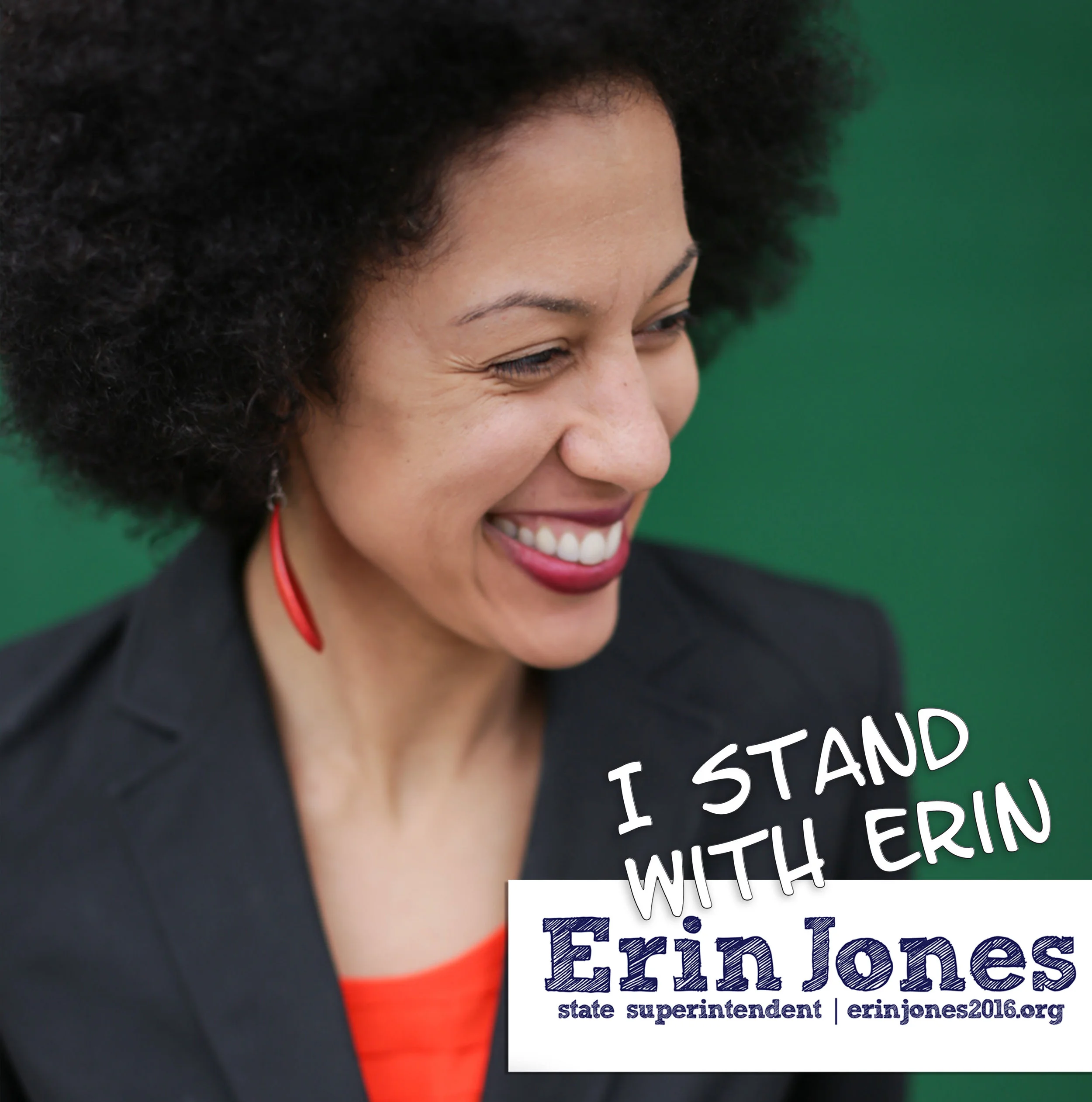
Chris Reykdal, a privileged white man, just compared Erin Jones, a black woman vying to become the state’s first elected black leader at the state level, to Donald Trump.

There are some Donald Trump tactics being used here, only it’s Chris Reykdal, not Erin Jones, who is gutter diving.

Read More

More students need to hear their schools boldly declare that Black Lives Matter

Last week, an extraordinary event was planned at South Seattle's John Muir Elementary  to publicly declare that Black Lives Matter. The event was then “canceled,” however, after the school and the district received at least one threatening phone call.

Paige Cornwell summed up the situation in an article in the Seattle Times last Friday evening:

“The elementary school had scheduled a celebration called “Black Men Uniting to Change the Narrative,” where more than 100 black men would gather outside and greet students as they walked into the building, with the goal of dispelling stereotypes. A similar event was held at South Shore K-8 (another south-end public school) last school year.
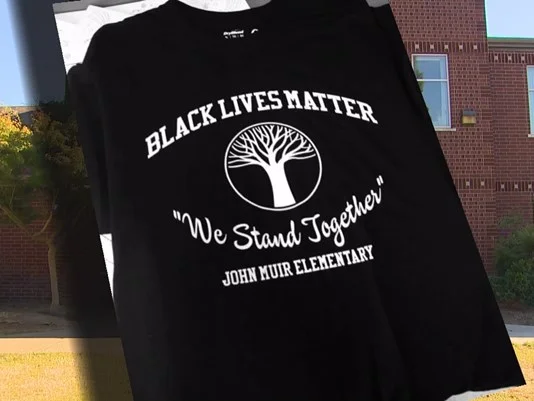
Teachers had planned to wear shirts that featured the school’s name along with “We Stand Together” and “Black Lives Matter.” Several local news outlets published stories about the teachers’ plans, which were then picked up by conservative national news outlets such as Fox News, Breitbart and the Daily Caller.
On Friday morning, several people still showed up and high-fives students as they arrived. Meanwhile, at Leschi Elementary, community members and teachers high-fives and cheered for students who were walking into the building. Lesch teachers wore shirts that said “Leschi (Hearts) Black Lives.”
John Muir received at least one threatening call related to the event, district spokesman Luke Duecy said. The district decided to cancel after consulting with Seattle police and the district’s safety and security staff.
At least one local story included a parent who said he wasn’t informed about the shirts, and that he had concerns about it. John Muir PTA President Amy Zern said all parents were informed, and that the community had embraced both the event and the teachers’ plans.
“There was a plan in place to discuss this in an age-appropriate way, and in our community, there’s been nothing but support,” Zern said. “It’s awful to see this reaction.”
Parents saw that there was a lot of “national hatred” in comments posted on stories about their school, she said.
About half of John Muir’s 400 students in kindergarten through fifth grade are black. About 20 percent are white, and 10 percent each are Hispanic, Asian or two or more races. The school sees its diversity as an asset, Zern said.
“My white child is absolutely ready to embrace the idea that some folks are not being treated the same as some other folks,” she said. “It’s not a surprise to her 9-year-old mind. She sees it.”
 

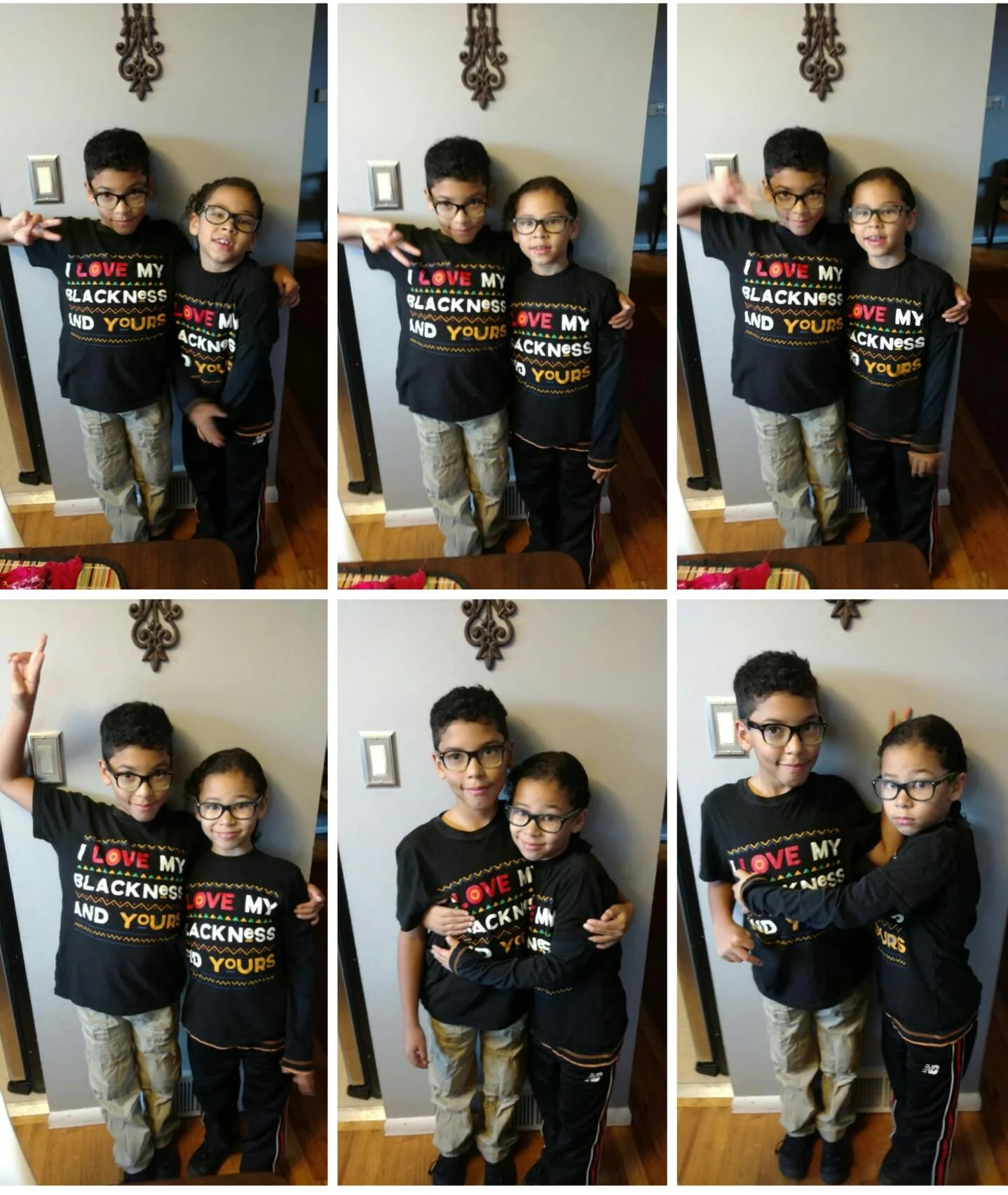
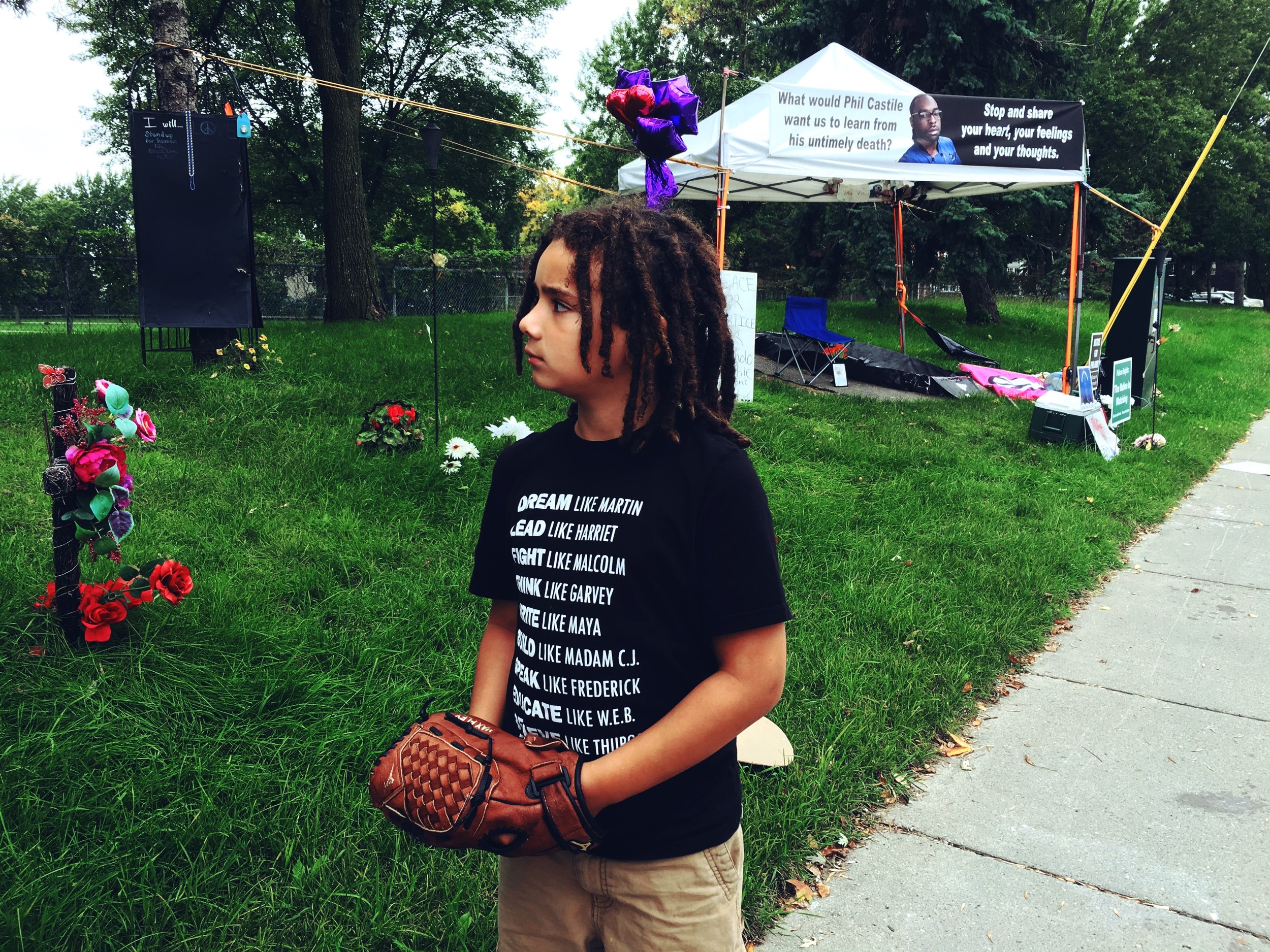
I asked my biracial 8-year-old, Julian, what he would think if teachers at his school wore Black Lives Matter t-shirts. Would it be a good thing? A bad thing? Doesn't matter?

“Good,” he said. “It would just be cool to see that they would actually care, and we could know that.”

Jason McGillie lives in Rainier Beach, and his son, Fenix, was a second-grader at SouthShore last year and is now a third-grader in his first year at John Muir. Jason dropped his boys off during SouthShore’s “Changing the Narrative” event last year. (For context, Jason is white, and his wife, Reese, is black.) 

“I was walking on air for the next five hours just from the positive energy and from having gotten to see it happen,” he said. “Just being able to drop the kids off and see the looks on their faces, it was really, really cool.”

When he saw a flyer for this year’s event at John Muir, he posted a photo of it on Facebook and started spreading the word about this amazing thing that was about to happen again. And then he found out it was canceled. He said the kicker was a surprisingly emotional automated message that went out to the school’s parents.

“You could tell that she (John Muir Principal Brenda Ball Cuthbertson) was just barely keeping it together. She was obviously distraught, just emotionally distraught,” McGillie said. “It was intense. If you had no heart or soul at all and didn’t care about it one way or another, you would still be like, ‘She’s going through something. That is awful.’”

When Reese and Fenix pulled up to the school Friday morning, they found a large group of black men at the school anyway, in spite of the "cancellation." Most of the teachers in the school still wore their Black Lives Matter t-shirts as well. It became an act of courage as well as a celebration of community.


One of the Catch-22s of parenting is how ultimately separate we are from our kids. We love and feel for them with such intensity, but in the end, Julian isn’t me. Zeke isn’t me.

And there will always be ways that we are different. It’s beautiful, mostly. They are these mysterious gifts that slowly unwrap themselves over time, revealing new and fascinating parts of themselves and their thoughts and their quirks.

It also means there will always be things I don’t know or fully understand about them. As a white parent to biracial kids, it’s hard sometimes knowing that my kids and I will always know a different racial identity, that there will be a huge part of their everyday experience in this country that will always be unavailable to me, for better or worse.

And so it’s especially strange to think that one of the ways I can’t be there for my boys is that I can’t reflect back to them a face that looks like theirs. I mean, on the one hand, we look alike. Zeke is pretty clearly my son, and you need only talk with Julian for a few seconds to know we’re so connected. But this same phenomenon is only deepened with Julian, who isn’t my biological son, even if we’ve been together since before his second birthday.

There’s power in my sons knowing strong, proud black men, and there’s power in my sons seeing men who look like them in ways I don’t doing something bold like this. And it’s a power they need to experience and that I can’t directly provide them.

There’s similar power in all the students regardless of their race having that experience at John Muir and at SouthShore, seeing black men in a positive, non-stereotyped, momentarily non-racist light. To see them celebrated and celebrating.

As Jason described it, “this is informing [Fenix’s] worldview in a way that is not the norm and is certainly not the narrative,” even if Fenix himself can’t articulate or necessarily even notice the powerful effect.

But instead of celebrating the beauty of a school as intentionally inclusive as this, we have another example of a fear-driven response to a proclamation that Black Lives Matter. That should not be a controversial statement, and it isn’t the opposite or antithesis of anything good. It is just a true statement.

My sons’ lives matter. My partner’s life matters. My father- and brother-in-law’s lives matter.

The lives of the men who showed up at John Muir Elementary on Friday matter, and their presence in the lives of those kids, that matters, too. I can't applaud long or loudly enough the courage they showed in being at John Muir last week in spite of it all, and the same goes for the teachers and staff who still wore the shirts.

The phrase -- the very idea that Black Lives Matter -- is one filled with love and compassion. The response is too often grounded in fear and shows up as a quick retreat to less controversial ground that doesn’t risk the safety and comfort of white folks.

Maybe more shows of bravery and solidarity like this can start to change that narrative, too.

"You don't have to live next to me, just give me my equality..."


Nina Simone was a brave woman to be singing these words back in 1965.

There's something particularly striking and incredible and sad about watching her play it live now, with the benefit of perspective. She's on fire -- in lots of ways, yes, but mostly in the I'm-burning-to-death kind of way. She's on fire, and she's releasing these desperate, guttural cries about oppression and bigotry to whomever is in the room, sharing her pain by (figuratively) rolling around onstage for everyone to see.

The crowd thinks she's entertaining them. She knows she's trying to put out the fire.


"Mississippi Goddam"
Written by Nina Simone (© Warner/Chappell Music, Inc)

Alabama's got me so upset
Tennessee made me lose my rest
And everybody knows about Mississippi Goddam

Alabama's got me so upset
Tennessee made me lose my rest
And everybody knows about Mississippi Goddam

Can't you see it
Can't you feel it
It's all in the air
I can't stand the pressure much longer
Somebody say a prayer

Alabama's got me so upset
Tennessee made me lose my rest
And everybody knows about Mississippi Goddam

This is a show tune
But the show hasn't been written for it, yet

Hound dogs on my trail
School children sitting in jail
Black cat cross my path
I think every day's gonna be my last

Lord have mercy on this land of mine
We all gonna get it in due time
I don't belong here
I don't belong there
I've even stopped believing in prayer

Don't tell me
I tell you
Me and my people just about due
I've been there so I know
They keep on saying 'Go slow!'

But that's just the trouble
'Do it slow'
Washing the windows
'Do it slow'
Picking the cotton
'Do it slow'
You're just plain rotten
'Do it slow'
You're too damn lazy
'Do it slow'
The thinking's crazy
'Do it slow'
Where am I going
What am I doing
I don't know
I don't know

Just try to do your very best
Stand up be counted with all the rest
For everybody knows about Mississippi Goddam

Picket lines
School boy cots
They try to say it's a communist plot
All I want is equality
For my sister my brother my people and me

Yes you lied to me all these years
You told me to wash and clean my ears
And talk real fine just like a lady
And you'd stop calling me Sister Sadie

Oh but this whole country is full of lies
You're all gonna die and die like flies
I don't trust you any more
You keep on saying 'Go slow!'
'Go slow!'

But that's just the trouble
'Do it slow'
Desegregation
'Do it slow'
Mass participation
'Do it slow'
Reunification
'Do it slow'
Do things gradually
'Do it slow'
But bring more tragedy
'Do it slow'
Why don't you see it
Why don't you feel it
I don't know
I don't know

You don't have to live next to me
Just give me my equality
Everybody knows about Mississippi
Everybody knows about Alabama
Everybody knows about Mississippi Goddam

The Stranger's overwhelmingly white 'election control board' no longer supports Erin Jones for OSPI

The Stranger's overwhelmingly white 'election control board' no longer supports Erin Jones for OSPI

The Stranger’s overwhelmingly white “Election Control Board” has rescinded the paper’s endorsement of Erin Jones for state superintendent of public instruction.

Jones is the first African-American woman to run for statewide public office in Washington. The Stranger is now backing her opponent, Chris Reykdal, a white man from Tumwater who has most recently been serving in the state legislature.

Staff writer Sydney Brownstone seems to have spearheaded the campaign against Jones.

Read More

Reflecting on the first day of school

Yesterday was Julian's first day of second grade. I wanted to write these thoughts down last night after he and his brother went to bed. Instead, Julian sleepwalked into Zeke’s room (naked, for good measure) and woke Zeke up, and Zeke cried, and you get the idea until 11:40, when I woke up in a chair in Zeke’s room.

So, it’s today instead of yesterday, but it’s better late than never.

Only two of last year’s full-time grade-level teachers are back at Emerson, where Julian is starting his third year. The PE and music teachers and other support staff are mostly back, and most of the administration remains the same, but almost all of the full-time teachers left after last year, including some that had been there for some time. I’m still not sure what really happened or why, unless there’s no more story there than the one we’ve heard before about teachers fleeing challenging conditions at an under-resourced school.

“This is the differentest year I’ve ever had at Emerson,” said Julian. He thinks the massive turnover is connected to low pay and the teacher strike that started last school year. Two of his best in-school friends from the past couple years were no-shows on the first day as well and turn out to be enrolled someplace else. All this after waking up to get to school an hour and a half earlier than ever before thanks to the new bell schedule.

He also said they only got one long recess instead of the three shorter ones they had last year, and that as second graders they’re not allowed to sit down in the hallway if they’re waiting for the bathroom.

I was approached by a mom offering me an opt-out form. More on that later.

We’ll see. I’ve only exchanged a few words with my son’s new teacher, but she’s already spent the better part of two days with him.

It’s a strange, unnerving thing, in its way, to send your kids to school. Not that it isn’t exciting and liberating and all kinds of other things, but it takes a lot of trust to let go of that hand and just hope that the (in this case) woman caring for him during the day will treat him with respect and love.

He seems happy. Totally fine. But I wonder, what are her biases? What is the difference between how she consciously thinks of Julian and how she will unconsciously treat him. Or other kids in the class.

I think he’ll be fine. He’s doing great. But it’s a lot to think about.

An Open Letter from Erin Jones

An Open Letter From Erin Jones:

Yesterday I was left saddened and in disbelief after reading the Stranger’s portrayal of my positions on the changing landscape of LGBTQ youth education and attempt to undermine 25 years of hands-on commitment to fighting for openness, acceptance and success for EVERY child. I have been a longstanding, strong supporter of LGBTQ children and adults and their rights to be treated equally, respectfully and lovingly in their schools and communities.

My track record is something my opponent—or writers at the Stranger, who did not bother to interview any of the many LGBTQ leaders or former students I have worked with— cannot take away.  Ultimately voters will make the call on whether a career educator, who has worked with some of Washington’s most vulnerable populations, should be rejected for what amounts to language that does not reflect my values or lifestyle.

I want to be clear that I recognize and regret using overly equivocal wording on issues related to the LGBTQ community.  I recognize that I have let friends and supporters down in my word choice. I know that in issues of race and sexual orientation, words do matter.  I used words that I have employed to persuade individuals who do not share our progressive values, but they were wrong in this context.  I assure you that my values have never wavered in my support of the LGBTQ community.

As an educator, I believe one never stops being a student. In the months since friends and supporters first raised the issue of my perspective on trans education in elementary schools, I have spent hours on the phone talking with friends who are members of the LGBTQ community, allies, experts on sexual health, parents of LGBTQ youth and LGBTQ youth themselves. I have intentionally sat in spaces to learn and gain better understandings that will help me best serve our students and our communities.
Over the course of the campaign I have been asked if I think being LGBTQ is a choice or a sin. I do NOT believe being LGBTQ is a choice, nor do I believe that being LGBTQ is a sin! However, my job as the state education leaders is not to take a stand on my religious beliefs but to ensure schools are prepared to be absolutely inclusive and embrace each and every young person and their families. To that end, I fully support a comprehensive sexual education curriculum that includes issues of gender identity, gender expression and sexual orientation. Even our youngest of children are experiencing bullying for gender expression that does not match their gender identity, from boys being bullied for having long hair to girls being harassed for not wanting to play with dolls or participate in tea parties. However, I do believe that our teachers must be effectively trained on how to teach the material to students at all levels. Our students deserve to receive the most accurate, compassionate and open-hearted curriculum.  I believe this office has a responsibility to work with teachers and advocates to provide the resources and training necessary to support students across Washington.

My personal and professional life experiences and actions with the LGBTQ community are a mirror into who I am, and have always been. As a teacher, I worked to ensure that all my students felt safe and knew they were accepted and loved for who they were, regardless of their socioeconomic status, religious beliefs, gender identity, expression or sexual orientation. One example of my advocacy was my willingness to take on an additional course on diversity as an instructional coach at the high school. The school needed someone to step in when a teacher had to take a leave of absence, and I had the gift of participating in learning alongside my students. A significant portion of this course addressed developing inclusive practices for the LGBTQ community. In fact, we also created the first Mix-it-Up Day with the express purpose of helping students embrace the ethnic, linguistic and sexual diversity around them. As a mother, I have two biological children, an adopted daughter who is biologically my niece, and two socially-adopted children who were ostracized by their families after “coming out.” These young people are not biologically mine, yet I have embraced them and they adopted me as their surrogate mother, because I accept and love them for who they are. The thought of rejecting a child for being his/her/their authentic self makes my heart sick.

As a Black Woman, who holds the honor of being first to run for statewide office in Washington, I know too well what it means to be systematically and socially marginalized. My experience of being both Black and Woman is the foundation of my passion for equality and equity of all people and at every level of society. To suggest otherwise is a clear misrepresentation of my character, the history of my actions in my personal and professional lives, and is shortsighted and hurtful in nature.

I am running for OSPI precisely because of my combined personal and professional experiences. These experiences have led me to serve for over 20 years in K-12 environments with some of the highest need, highest poverty, and most ethnically, culturally, and sexually diverse communities in our state. I am proud of my work and support for the rights of all people—and all children—regardless of race, sexual orientation, gender identity or economic status. I have been a champion for children and will bring to the table a comprehensive plan to address our need for full funding, our need to address standardized testing, our need to eliminate opportunity gaps, our need to improve teacher retention, and our need to ensure that our schools are safe spaces for every child and their families. For over twenty years I have worked to make sure each and every child is valued, that every school environment is inclusive, and that every student is supported to be able to become his/her/their best selves.

Superintendent of Public Instruction is not simply another political office to occupy. It is the office that has the responsibility to invest in our children and empower them to be the next leaders of our world. I am the champion for our state's students and will work to ensure that each child gets a quality education regardless of age, race, zip code, orientation, expression, or identity.

Sincerely,


Erin Jones

Candidate Office of Superintendent of Public Instruction

Help local teachers buy supplies for their classrooms

The IRS allows teachers to declare some relatively small amount of money on classroom supplies every year — $250, I think. But every teacher, I’m told, spends more than that.

Kenneth Maldonado, for example, is a great friend and a great teacher entering his sixth year in education in Seattle. His math classroom has one chalkboard, and he’s asking for help to buy a few whiteboards.

Click here to find another classroom to support through Donors Choose.

Help as you’re able, and if you post similar requests to Mr. Maldonado’s in the comments, I’ll do my best to repost them and spread the word.

I'm driving on Dead Indian Memorial Road, and I shouldn't be

I’m riding through southern Oregon right now in the passenger seat of my family’s gray Prius, on our way from Sunriver to Ashland.

On Dead Indian Memorial Road.

Siri just directed us — out loud — to turn onto Dead Indian Memorial Road. I was conscious of my boys being asleep behind me.

According to oregonencyclopedia.com:

“Dead Indian Road is one of the oldest trans-Cascade travel routes in southern Oregon, connecting Ashland and the Rogue River Valley with the Upper Klamath Basin. The road crosses the headwaters of Dead Indian Creek a short distance west of Dead Indian Road’s junction with the much newer Keno Road, which heads south to Howard Prairie Reservoir. In the 1990s, Jackson County decided to change the name to Dead Indian Memorial Road, but controversy over the name continues to erupt.

“The name of Dead Indian Creek, the source of the road’s name, dates to the early 1850s. Several variations of the name hint at a story that settlers killed Indians on the creek, but there is no evidence to support that account. Neither does the name derive from General Phillip Sheridan’s infamous statement that ‘the only good Indian is a dead Indian.’

“The most likely account is that Ashland-area settler Patrick Dunn and others discovered the bodies of several Indians in summer-encampment huts or pickups along the meadow near the headwaters of the creek. They could have died from disease, or other Indians may have killed them as part of the bitter and ongoing war between the Rogue Valley’s Takelma (or Shasta) and the Klamath.”

I can’t claim to have researched the history of the area, and I’m not old enough to have overlapped with Patty Dunn, but the Oregon Encyclopedia sure is quick to let white people off the hook. They’re making sure to label these deaths of legend as Indian-on-Indian violence, even as they claim there’s “no evidence to support” the idea that settlers perpetrated violence on the native people they encountered.

It just starts to seem ridiculous.

The United States was founded on racism and brutality. That’s just true. My predecessors in white supremacy, privilege and oppression did their best to physically eradicate the native people they encountered. Then, rather than teaching me about the genocide in our recent past, my textbooks called it “manifest destiny.”

The Nazis were monsters, but we’ve been miseducated to believe our own genocide didn’t happen and/or was justified. Manifest destiny.

We continue to see that justification reinforced subtly even today. Right now, today, some 20 years after the Washington Bullets changed their name to the Wizards, there is still a professional football team in our nation’s capital called the Redskins.

Try to imagine a soccer team in Berlin using a volatile Jewish slur as its nickname. That would just be wrong. No gray area — just horrifying. Meanwhile, fans and sportscasters and reporters across the country (with a handful of noble exceptions, like the Kansas City Star, where a sports editor years ago stopped printing the word) still toss the slur “Redskins” around as casually as if it were nothing more than the name of a football team.

The Cleveland baseball team is still known as the Indians, and its mascot is named “Chief Wahoo.” A white woman played Kevin Costner’s Native American love interest in “Dances With Wolves.” Tonto speaks only in grunts.

These names and images and ideas work together to program us into fundamentally and unknowingly believing in the justification of subjugation, into believing in white supremacy. It’s insidious.

I think we’ve got to change every one of these names that doesn’t pass the smell test of respect. If it’s been appropriated, then let’s give it back.

Of course, this alone won’t be enough. Just making sure that our society and our institutions don’t blatantly support continued racist discrimination against a violently oppressed people is only a start. I don’t know what it will take, how we could begin to really make things right, but we’ll never find out until we start to humbly, publicly acknowledge the truth of the past.


Washington Attorney General joins web of charter lawsuits, asks court to throw out political arguments

The web of lawsuits around Washington State's charter schools has gotten tighter and more tangled.

Parents and students involved in the charter school suit stand behind lead attorney Rob McKenna at Tuesday's press conference.

Led by Attorney General Bob Ferguson’s office, the State of Washington filed a motion today to dismiss two of the plaintiffs’ core arguments in El Centro de la Raza v. Washington, another lawsuit filed against charters under the leadership of the Washington Education.

"Those arguments are (1) an attempt to tie charter public schools to the state’s underfunding of basic public education, which is a separate matter that is under active supervision by the state Supreme Court, and (2) an attack on last academic year’s operation of charter public schools, an argument that a court cannot entertain because, in these circumstances, the plaintiffs’ argument can only be read as assuming too much or too little, too late," said the Washington State Charter Schools Association in a statement, "In either case, both arguments are also meritless."

Today’s filing follows yesterday’s announcement that 12 families representing the charter sector filed a collective motion of their own calling for the dismissal all of the organizational plaintiffs named in the lawsuit.

"The motion was filed on the grounds that the advocacy organizations are merely attempting to rehash policy arguments in a courtroom by recasting them as constitutional concerns – policy arguments that were decided at both ballot box and in the 2016 Legislative session," said the WA Charters statement. "The Washington Education Association, the League of Women Voters and El Centro De La Raza are among the lobbying groups the intervenors are asking the court to dismiss."

The state’s existing charter public schools opened after voters passed a ballot initiative in 2012. When the Washington Supreme Court identified a glitch in the voter-approved charter school law that conflicted with the state constitution, a bipartisan group of lawmakers studied, vetted, and in March 2016 passed a bill specifically designed to address the Supreme Court’s concerns. Legal experts from both sides of the aisle, including non-partisan staff attorneys, combed through SB 6194 to ensure it would pass constitutional muster and restore the will of the voters by creating a path for charter public schools’ long-term success.

Washington’s operating charter public schools began their second school year this month, having quickly become a vital part of Washington’s public education system for the students and families they serve. The schools already are making a quantifiable difference in the lives of hundreds of Washington families, particularly in historically under-resourced and under-served communities.

More than 67 percent of charter public school students in Washington are students of color, as compared to 43 percent of non-charter public school students statewide. In addition, approximately two-thirds of charter public school students qualify for free or reduced-price school meals. At four of Washington’s charter public schools, that number exceeds 70 percent.

Charter schools are a type of public school, approved and overseen by a state or district authorizer. Like all public schools, they do not charge tuition, they are open to all students, and they are publicly funded. However, charter public schools are held more accountable for showing improved student achievement. In exchange for greater accountability, teachers and principals are given more flexibility to customize their teaching methods and curriculum to improve student learning.


NAACP's 'moratorium' on charters is about putting politics ahead of kids

Washington State’s public education system is broken.

Consider this, courtesy of Sharonne Navas, executive director of the Equity in Education Coalition:

“Forty percent of Washington State’s children live in families with incomes below 200% of the federal poverty line, and a disproportionate number of these are children of color. Washington State also has the fifth biggest opportunity gap between black and white students in the United States, and the gap between Hispanic and White students in Washington – about two and a half grade levels – is nearly as large.”

Seattle Public Schools, like many others across the state, also has a well-documented history of disproportionate discipline of students of color.

We need things to change. Our kids need different opportunities and different results right now, even as most of Seattle remains oblivious to the segregation and inequity in our schools. That’s how far along we are in solving this problem. Most people don’t know or admit it’s a problem, and many more don’t or wouldn’t care.

Meanwhile, those of us who agree that students of color are not getting the educational opportunities they deserve — which should unite is in spite of any and all other differences, considering the scale of the problem we’re facing — spend as much time fighting each other as we do fighting for change. We keep splitting hairs until we find we’ve split ourselves, gradually falling into factions: you’re either pro-charter or pro-union, part of the anti-reform crowd or one of the privatizers.

Recently the NAACP issued a strongly worded resolution regarding education. Rather than decrying our inequitable traditional public schools or demanding change for perpetually under-funded, low-performing schools, the NAACP chose to tag itself into this childish game by choosing a side, calling for a “moratorium on the proliferation of privately managed charter schools.”

It also resolved to “support legislation AND EXECUTIVE ACTIONS (capitalization per the original) that would strengthen local governance and transparency of charter schools and, in doing so, affirms to protect students and families from exploitative governance practices.”

Seattle Public Schools are governed by a school board whose majority does not represent the interests of most students or families in the city. Does the NAACP plan to step in and save us from the exploitative governance practices we’re currently struggling under? Maybe by overriding our half-baked school board, or by forcing an equitable McCleary solution through the legislature?

No, this is not an earnest voice calling for equity, but an acknowledgement that charter schools sit balanced on a deeply entrenched line in the sand. And instead of attacking the source of inequity regardless of politics, the NAACP is publicly declaring that it’s chosen a side.

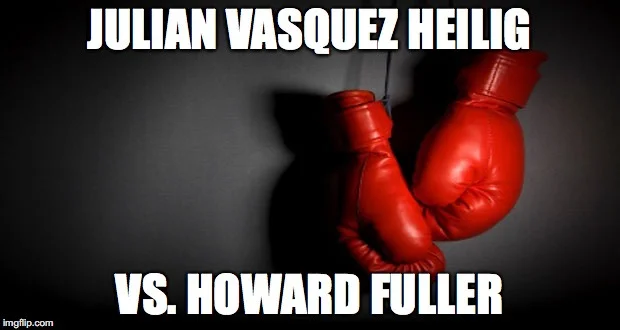
To wit: Julian Vasquez Heilig, who serves as Education Chair for the NAACP chapter that wrote the resolution, broke the news of the resolution on his own blog on July 29. In the handful of posts since, one has been headlined "Will @ShavarJeffries chicken out?" (Jeffries is a charter supporter and head of Democrats for Education Reform (DFER)), and another bore this image of his name violently opposing his pro-charter enemy (below).

Woof.

Woof.


This is not the tone of someone looking to collaborate to solve a problem. This is Vasquez Heilig using the NAACP as a platform to build his own brand and proliferate his own views.

Most of us agree by now that students of color are not getting the educational opportunities they deserve. Most within the NAACP, I imagine, believe the same. Rather than elbowing each other to get to the front of the line, let’s go our slightly separate ways with mutual support and race to the finish. If our traditional public schools are so good, don’t issue a moratorium on what you perceive as the competition — go out and prove how damn good those public schools are.

NAACP CEO Cornell Brooks’ bio says “he is working with Association leadership and membership to build an NAACP that is multi-racial, multi-ethnic, multi-generational, and one million members strong."

My multi-racial family lives in South Seattle. My sons are biracial. My oldest attends our neighborhood school: by definition, an inner-city, urban, traditional public school that struggles to educate kids of color and has had three principals in the past four years. My youngest is likely to follow him there in a few years.

This is real for me. It’s real for a lot of people. Our public education system is not working for enough families like mine, and while it's hard to come out with an opinion that runs contrary to a respected civil rights organization like this one. Still, a recent survey showed that 72 percent of black parents favor charter schools. For all its strengths, the NAACP does not monolithically represent the interests or opinions of its constituents on any single issue, and in this case, they seem particularly out of step.

In an ideal world, there would be no need for charters. The public school system would simply meet the needs of all of its students. Instead, we live here, now. With so much of the opportunity gap resulting from a fundamentally inequitable system, students of color and low-income students need more options that allow them to choose out of our broken system. Charter schools give those families a pathway to school choice.

The NAACP is making a political statement to block families who need change from choosing a better school for their kids, to block the further development of one budding alternative to the schools that have failed kids of color since forever. Let’s hope their next resolution is to stop playing in the sand, and to start putting kids first in every conversation about education.


Read more from around the country:

Seattle City Council is trying to sneak in a vote to build a military police bunker

The Seattle City Council is trying to squeeze through a sneaky little vote to build America's most expensive police precinct in north Seattle. 

City Council members -- including Tim Burgess, it seems -- have maneuvered to schedule a vote for Monday, when Councilmember Kshama Sawant, a hero for marginalized communities who opposes the proposition, will be away. The vote -- set for two days (!) from now, on Aug. 15 -- would approve a $149 million budget to build a bomb- and ballistics-proof bunker, diverting scarce public dollars to support the further militarization of police even as we fight nationwide for demilitarization and humanization of law enforcement.

The north precinct is in need of renovation, but this is an ill-advised project to begin with. As with all police measures, and especially those with militaristic aspects, this will disproportionately impact kids and families of color. They need your voice. Here's how to do your part:

  • SHOW UP on Monday, Aug. 15, and voice your dissent to the council.
  • Email the city council now -- especially councilmembers Lorena Gonzalez, Bruce Harrell, Lisa Herbold, and Rob Johnson -- and demand that:
    • 1. Black lives, and lives of people of color generally, actually begin to matter in Seattle when it comes to city policies and projects;
    • 2. The city council either vote against the resolution being pushed in favor of allocating $149 million to the police bunker, and/or call to postpone voting on the resolution until Councilmemeber Sawant returns;
    • 2. The city council access and use the Racial Equity Toolkit before any further action is taken in favor of the bunker, as a process exists that the council is NOT following at this time;
    • 3. The city council not make any money allocations at this time. The community is forced to wait until September-October of each year to present any funding requests, often much smaller in scale. The Seattle Police Department should never have priority over the community;
    • 4. They defund this bunker project completely. There are viable public safety alternatives that cost far less in taxpayer dollars and Black lives.

The Privilege of Ignoring Race

A year ago today, I was out in Ferguson.

Two years ago today, Michael Brown had been dead for a day, murdered on Aug. 9, 2014. A few weeks later, I wrote this. This seemed like a good time to take a second look at it.


I have read and heard and seen a lot of people saying a lot of different things about race in the wake of the Michael Brown tragedy — some compassionate, some ambivalent, some ignorant. This is something true:

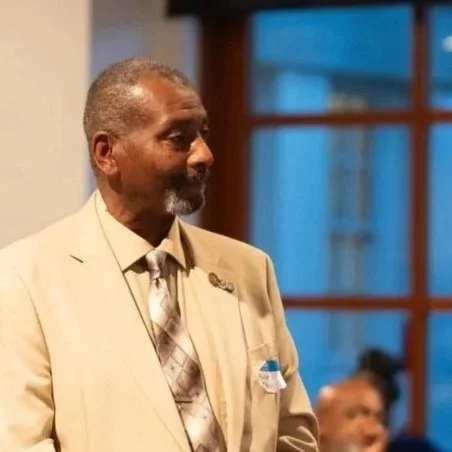
I took this picture this morning. Then Lindsay told Julian about Michael Brown, about who he was and what happened to him. She told him about how most police officers are people to trust, but that sometimes they make mistakes. She told Julian that it isn’t fair, but that sometimes he will need to be extra careful as he gets older because of the way he looks — that he will have to be that much more careful to stay out of trouble, to stay away from what looks like trouble, to stay in after dark, because it’s a matter of safety. She told him about having called to check in with his uncle Spencer a few days earlier, about asking Spencer if he was safe in L.A. and if he was being careful. She asked him if he understood. Julian asked a question or two, Lindsay answered, and then it was done.

This is what all this means to me:

Some have argued that the Michael Brown shooting isn’t about race. Many others have at least wondered. As you may know, I am white. I can tell you from experience that it is a privilege to ignore race. It is a privilege to be able to wonder whether or not this tragedy is a racial issue. It is a privilege to not have to start poking tiny holes in your six-year-old son’s bubble of innocence and sweetness in the days before he starts kindergarten.

We had conversations about race in my family when I was very young, too, and most of them were also very direct. Most of them even acknowledged the presence of danger and the possibility of violence. I vividly remember getting a version from my dad in elementary school of what his dad had told him as a kid: that there aren’t many good reasons to fight, but that if he heard anyone using the N-word at school — or using any other slur, or using anyone’s race or gender to hurt them or make them feel small — he had better step in and put a stop to it or come home with a bloody nose for having tried. That might not exactly fit with Dr. King’s belief in non-violence, but the message was clear: This is important. Not only do we not tolerate hate or racism, we will actively fight it. It’s a family value.

There is a subtle-but-important difference between these two sets of conversations, though. My parents (also white, coincidentally) chose to have these conversations with me and my siblings. They encouraged us to choose to stand up against blatant racism and hate. But I was not the target in the hypotheticals. I was on the sidelines. The guns wouldn’t have been aimed at me, so the conversation was different.
Lindsay and I talked with Julian this morning because he won’t have a choice. Julian needs to hear this, because he cannot choose out of his skin color or his black heritage. I can choose into the conversation, choose to step into the conflict. Julian does not have that privilege. He is about to start attending public school in a district that has recently been under scrutiny for disciplining black boys much more frequently than any other group. He will be stereotyped, he will too often be seen and heard through a racial lens, and he cannot avoid it. He cannot choose a different path. Before long, he will be, say, 10 years old and tall for his age. Soon after he will be a teenage boy of color living in a major city. He won’t have the privilege of staying on the sidelines when a police car drives past the park where he’s hanging out with his friends after dark. He won’t have the privilege of deciding it’s not about race when he makes a mistake and gets caught. And Lindsay and I, as parents, don’t have the privilege of giving him an option. We don’t get to decide whether or not he’s ready, because he has to be ready, because he has to stay safe. Because someone will call him a horrible name, and someone will treat him differently — probably unintentionally — because of how he looks, and because at some point, someone will view this sweet, loving kid as more of a threat, and he needs to understand what’s happening if he’s going to stay safe. He has no other choice.

NAACP resolves to issue charter school movement a reality check

I’ll admit it.

My first reaction was to think, “No, they’re wrong!”

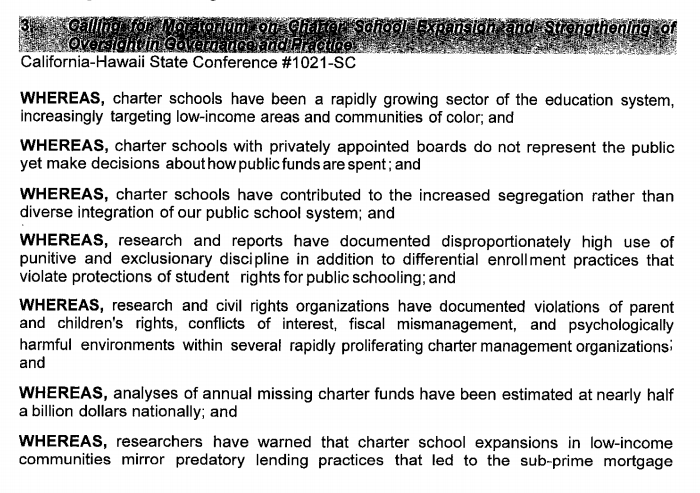
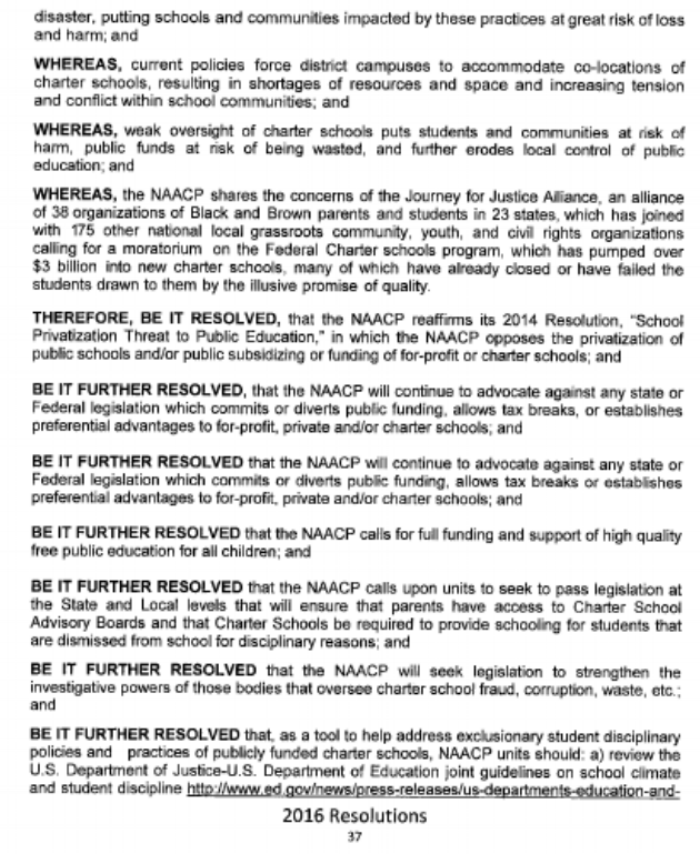
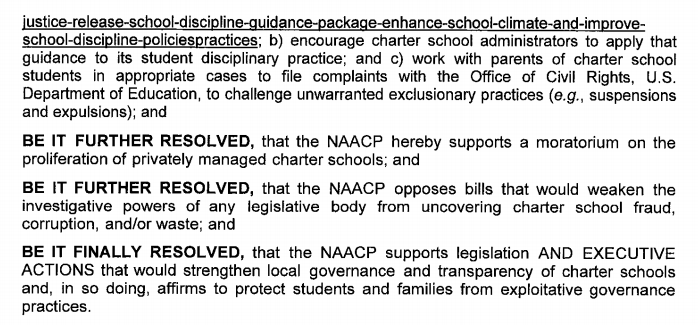
The NAACP approved this resolution, authored by the California-Hawaii chapter, last month. If ratified by the national board in the fall, it will become official policy. Look it over and see what you think:

No, they’re wrong!

But then again… who am I to have an opinion about the NAACP’s opinions?

Julian Vazquez-Heilig (chair of the committee that authored the resolution) and Jesse Hagopian are among the many already lauding the resolution and the strong stance against charter schools, viewing charters and the Teach For America/ed reform sector as puppets ushering a pathway to privatization. 

Other black leaders have been outspoken in their disagreement with the resolution. This from the Washington Examiner:

Jacqueline Cooper, president of the Black Alliance for Educational Options, told the Washington Examiner that the moratorium was "inexplicable."
"The fact that the NAACP wants a national moratorium on charter schools, many of which offer a high-quality education to low-income and working-class black children, is inexplicable," Cooper said. "The resolution is ill-conceived and based on lies and distortions about the work of charter schools. At their next meeting, we urge the board to reject this resolution and protect parental choice."
Shavar Jeffries, president of Democrats for Education Reform, also criticized the NAACP in a statement. "The public charter school moratorium put forward at this year's NAACP convention does a disservice to communities of color," Jeffries said.
"This moratorium would contravene the NAACP's historic legacy as a champion for expanding opportunity for families of color. In communities of color throughout our country, public charter schools are providing pathways to college and careers that previously were not available."
Jeffries added that the NAACP seemed to be unjustly attacking charter schools while turning a blind eye to bad traditional public schools.
"Indiscriminately targeting all charter schools, even the many great public charter schools that are offering students a bridge to college, while ignoring underperforming district schools, undermines the quality and integrity of our entire education system ... We'd be happy to partner with the NAACP to sanction or shut down low-performing charter schools. We'd oppose with the same resolve as the NAACP any charter that seems designed more by a desire to segregate than to innovate."
Steve Perry, founder and head of Capital Preparatory Schools, went on NewsOne Now to criticize the national NAACP. "They couldn't be more out of touch if they ran full speed in the other direction," Perry said. He said the national group is "out of touch even with their own chapters ... This is more proof that the NAACP has been mortgaged by the teachers union and they keep paying y'all to say what they want to say."
According to a report released in January by the Black Alliance for Educational Options, black students in public charter schools learn the equivalent of 36 extra school days per year in math and 26 extra school days in reading. The gains are even higher for black students living in poverty.


Like every discussion of education, race and equity, this requires a nuanced conversation. Like every non-fictional scenario, the lines are not black and white. Vazquez-Heilig, talking with The 74, interpreted the resolution he helped write as living in the gray area.

“I think what the NAACP is saying is we need to stop and take stock,” he said. “It doesn’t say we need to abolish charter schools, but we need to reevaluate where we are with charter schools right now.”

I have been an outspoken supporter of charter schools in Washington State, and I remain supportive today. I hear this as a reality check — and not one that just appeared overnight.

Traditionally, many civil rights groups have been vocally pro-charter because they know that more options are better. But at a certain point, those new options have to prove they are structured and run in a fundamentally different way, or else they will be revealed simply as different versions of the unacceptable status quo. The UNCF, as just one example, wrote a report four years ago now called “Done to us, not with us."

No matter how well-intentioned and good-hearted the education reform movement might be, unless it is guided by the voices of the communities it seeks to serve, it can’t really be the solution.

The data, however, supports charters, and there are many, many success stories and positive outcomes, just as there are many failures.

Charter schools create the space, governance-wise, to be the fundamentally different entities we need — a true alternative to the status quo. That freedom is badly needed, and it’s what makes good charter schools such a good alternative for the many students not set up for success in our current public school system.

But this possibility of equity is not guaranteed, and charter schools won’t live up to the promise of their freedom without an explicit, intentional focus on equity in process and outcomes; a commitment to examining everything through the lens of race, class, and privilege; a redistribution of power so that students, families and communities have the power to shape their schools’ design.

Otherwise, if reform is enacted without input and local leadership, it’s left up to the individuals running the schools to ensure equity. It’s up to the individual teachers and school leaders, and the individuals at charter management organizations, on school boards, and at charter school associations. And that’s at best a roll of the dice if they have not fully examined their personal biases and their organizational equity practices.

What's being called out here is paternalism. Let’s be clear. If you are white, you are probably not talking about race, and you (we — me too) are certainly not talking about it or living it in the same way as a person of color.

So, if a charter school, or a charter management organization, or a charter association, or a school board, etc., is predominantly run by white people, they need to be vigilant about blind spots, about centering students in every decision, about listening and learning in communities, building true partnerships with parents, forging authentic relationships with civil rights organizations and community leaders, examining their models, curricula, and discipline policies.

And, and, and, and.

The plot is still thick, but regardless of who does and doesn’t support the NAACP’s resolution, it remains a reality check.

For the ed reform movement, it is a call to do more than “engage” the communities it serves. If education is to be reformed, it needs to be done in a way that empowers communities of color and helps them to reform their own schools according to their vision and the wisdom of their lived experience. 

For me, as a white person, it’s a call, or a reminder, to constantly check myself.

I still believe in the promise of charter schools. I still believe in the academic integrity and good intentions of the education reform movement, of Teach For America, at the same time that I recognize the accomplishments, challenges and enormous promise of our traditional public school system.

I support any system, movement or ideology when it is building on the assets and input of students, families, and communities. If they promote better academic and broader student outcomes in a culturally responsive way, they have my support.

But they have to continually earn my support, just as they have to continually earn the support of the students and families they serve. I have to be continually sure the organizations and people and ideas that have my support are living out the promises that earned that support in the first place.

And I have to be sure I’m not saying, “No, you’re wrong,” when a community of color says what they believe is best for themselves.